


UNDERSTAND WHAT CHANGED
Some changes only emerge when you see the whole path.
Compare different moments in the same story to notice changes, recurring patterns, breaks, and things that stopped happening.
Trailon keeps each moment connected to its sources so you can return, compare, and continue without reconstructing everything from scratch.
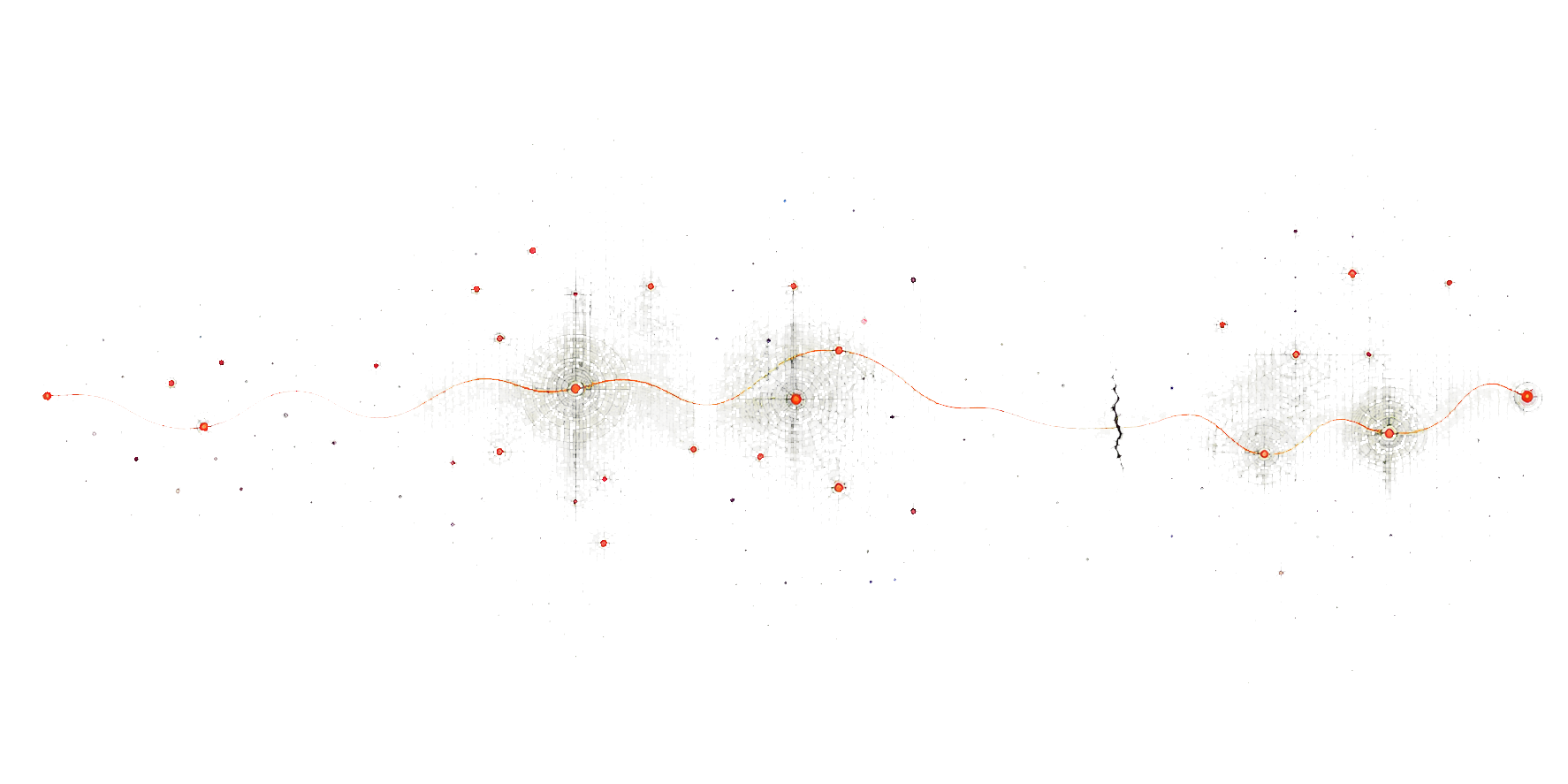
StatesChangesRecurrencesBreaksAbsencesSources
Questions that help reveal how a story changed.
Search crosses periods, themes, people, events, and sources. You need not know which record first showed a change.
What changed before that event?
Did it recur, or does it only look similar?
Where did a break occur?
What stopped appearing?
Which distant episodes remain connected by the same context?
Ask the whole history. The platform retrieves related episodes and keeps a path to the records needed to compare each reading.
Recording each moment does not, by itself, show how the situation changed.
Add sessions, conversations, documents, notes, or episodes and start the analysis. Trailon prepares states and continuities for comparison before the next question.
Material enters with its time, origin, and identity preserved.
Each session or record remains locatable even after becoming part of a larger history.
The platform prepares related themes, people, events, and states.
Scattered elements begin to form continuity without manual assembly for every reading.
Recurrences, changes, and gaps remain available for review.
Similarity does not become automatic equivalence; interpretation remains explicit.
Search across weeks, months, or years of material.
Each answer can return to the episodes, excerpts, and sources that support or limit a reading.
A history exists only when earlier states remain comparable.
Time gives us an order. Understanding comes from seeing what remained, what changed, what returned, and what stopped happening.
Recurrence can change a reading. So can absence.
An isolated episode may seem small. A similar event returning in other contexts may call for a different question.
But something disappearing from the records does not mean it ceased to exist. Trailon keeps presence, silence, and return distinguishable over time.
A longer view reveals what a single moment hides.
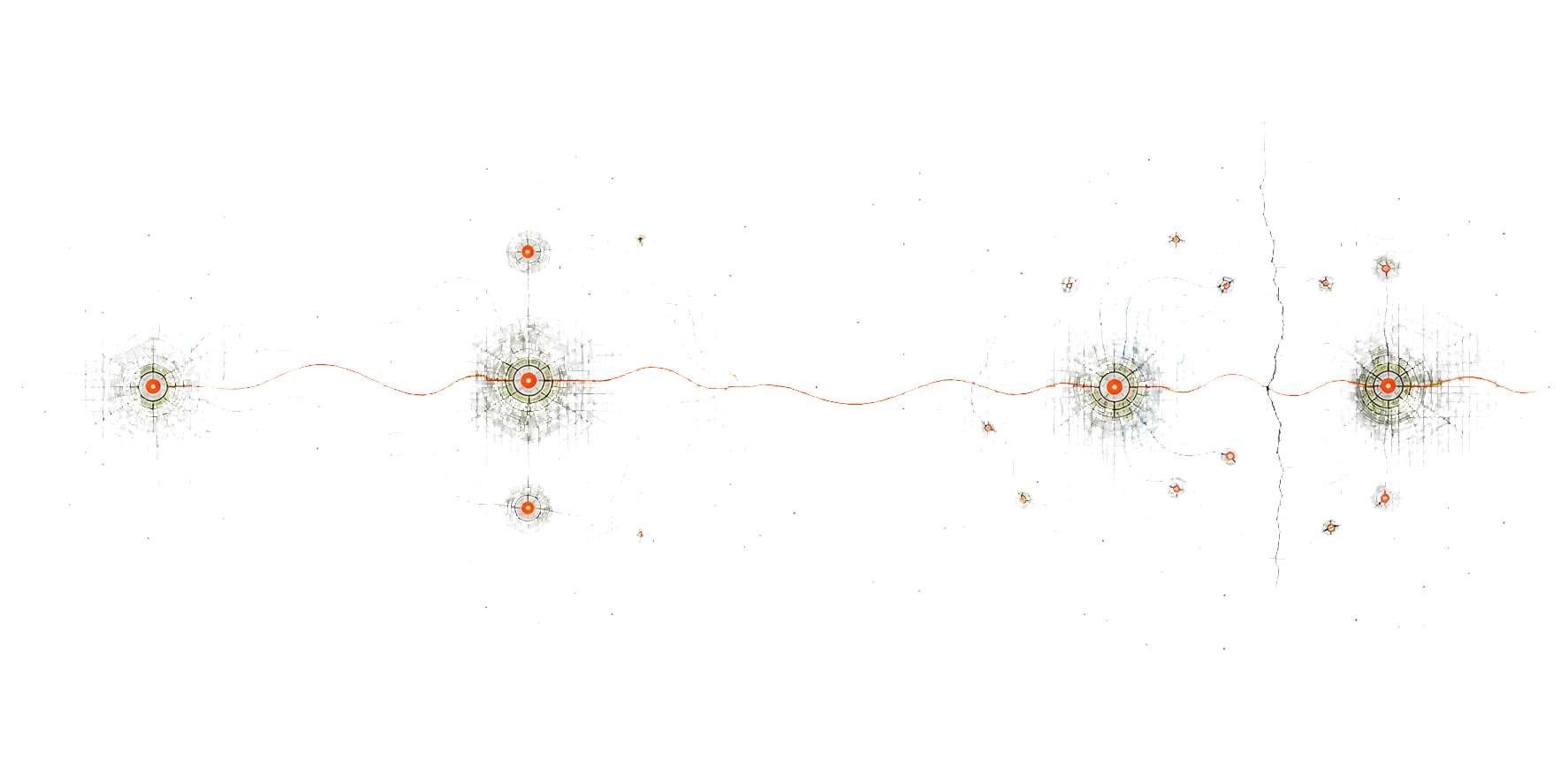
Recognizing a pattern is not the same as assuming its explanation.
Two episodes may look similar and have different contexts. A sequence can guide an investigation without proving causation.
Repetition is not cause
An event recurring does not, by itself, explain why it happened.
Before does not mean because
Earlier is a position in time; causation needs supporting evidence.
Similarity needs context
Similar forms can remain distinct when people, conditions, or moments differ.
Compare what changed without losing when and where each part appeared.
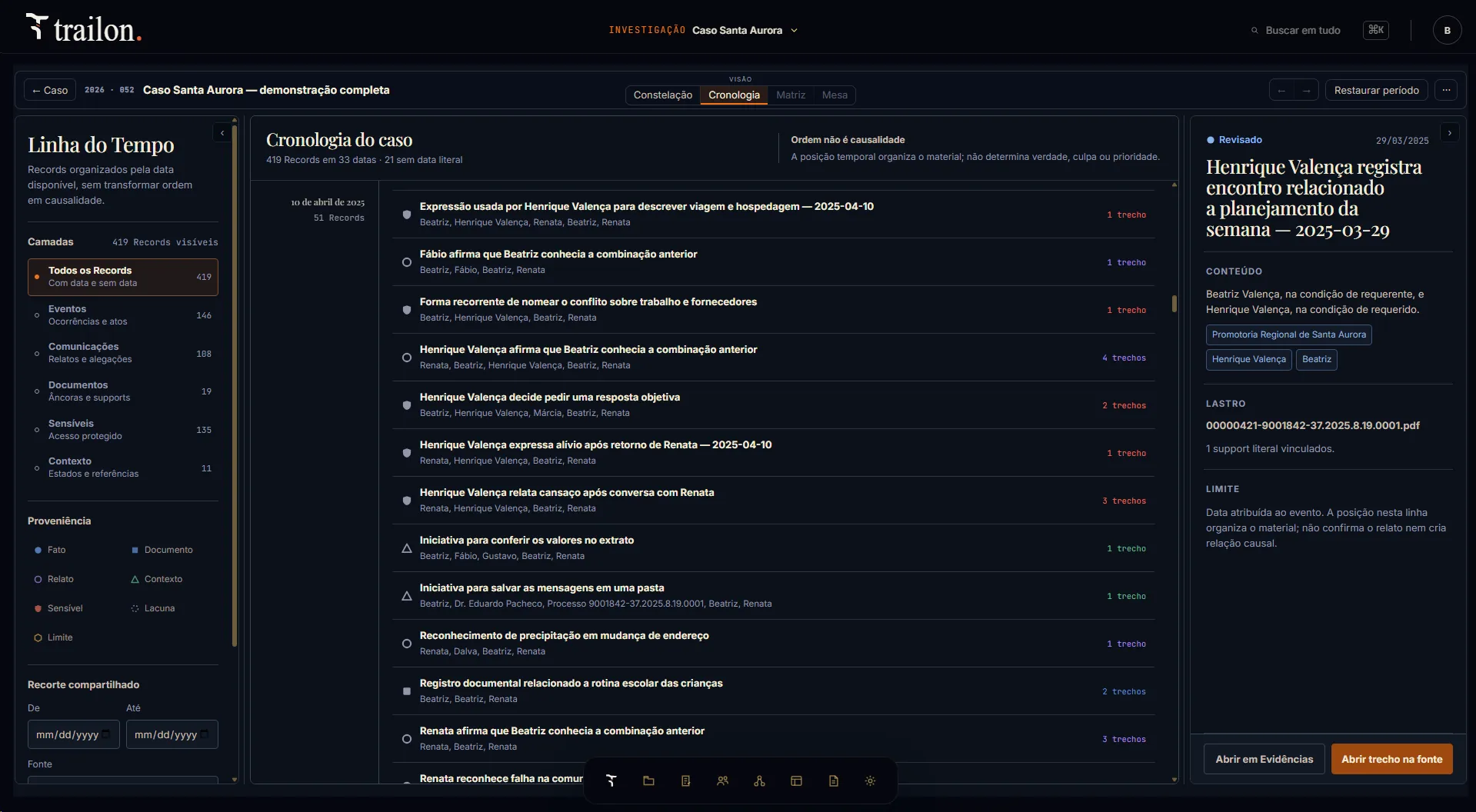
The timeline organizes events and states. Search finds episodes by meaning. Every reading stays connected to sources and excerpts that allow it to be examined.
Transferring records is not transferring a history.
A situation may pass between people, professionals, or teams. Whoever joins later needs to understand not only the record, but why particular episodes came to matter.
Earlier stateWhat was known and observed at each moment.Observed changesWhere a position, theme, or relationship began to change.Revised readingsWhat no longer explained the situation after new information appeared.Path to the sourceThe episodes, records, and excerpts supporting the history.
Explore the platformWhat changes when the history stays available.
The present can be examined alongside what came before without reducing each period to a separate summary.
Positions, themes, relationships, and behavior can be followed to the point where they began to change.
Similar episodes no longer depend on someone remembering a pattern.
What stopped appearing remains observable without being treated automatically as resolution.
New information can reframe the past without changing the original record.
Someone else can understand the path rather than receiving only a folder or final summary.
Do more than track what happened. Preserve the history needed to understand what changed.
Give the next question the context built over weeks, months, or years.