


FOR PUBLIC PROSECUTORS
An investigation can span years. Its context should not depend on who witnessed each step.
Statements, investigative steps, filings, documents, evidence, hypotheses, and actions accumulate as new lines of inquiry open.
Trailon helps keep the whole investigation navigable, preserving accounts, gaps, and paths to sources as the inquiry advances.
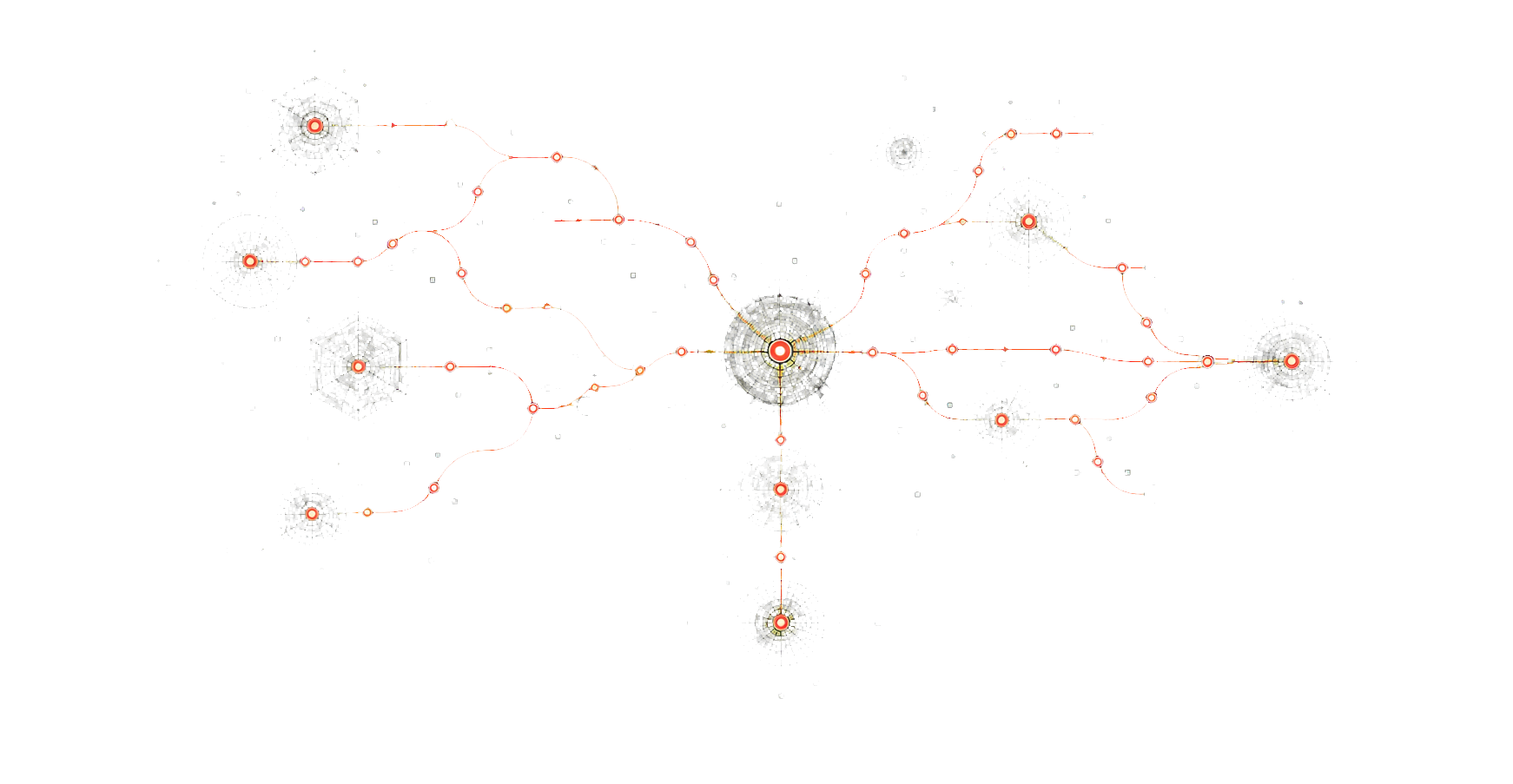
EventsStatementsInvestigative stepsEvidenceHypothesesOpen items
Questions you can ask directly about the inquiry.
Search and intelligence operate on an organized situation, not just isolated words inside files.
Which statements describe the same event differently?
Which investigative step introduced this actor, document, or hypothesis?
What remains open after new material appears?
Which elements cross formally separate proceedings?
How can another team resume the case without reconstructing years of work?
Ask the question in the platform. Trailon retrieves relevant contexts, actors, records, and sources and keeps the path to examine the answer further.
The inquiry grows. Understanding should not fragment with it.
Add the material and start the analysis. Trailon automates structural preparation of sources, records, identities, contexts, and relationships, and routes matters requiring judgment to review.
Sources enter in different formats.
Documents, messages, audio, and reports begin to be prepared within one investigation.
Investigative structure begins to emerge.
Records, identities, contexts, and relationships are prepared before the first question.
Matters requiring judgment go explicitly to review.
Ambiguities, candidates, and human decisions do not disappear inside automation.
Search and intelligence operate across the whole case.
An answer can be examined down to the records, excerpts, and sources supporting it.
Follow lines of inquiry without losing their branches.
Trailon organizes the investigation’s information landscape. It does not determine who acted, whether an offense occurred, responsibility, or which investigative step should be taken.
Line of inquiry
Follow how a hypothesis arose, which investigative steps changed it, and what remains open.
Conflicting accounts
Keep each statement linked to the event it describes, its author and time, and material supporting or challenging it.
Distinct timelines
Preserve when an event may have occurred and when it became known, investigated, or reviewed.
Context across proceedings
Connect relevant elements without erasing the formal unit, origin, or remit of each proceeding.
Explicit gaps
An inconclusive step and a source not yet obtained remain absences, not plausible answers.
Path to the source
Trace a current reading back to the records, excerpts, and sources explaining why it matters.
Transferring the conclusion is not enough. Transfer the path.
Prosecutors, analysts, and teams change. What must survive is not only the final summary but the structure needed to examine it, question it, and continue the inquiry.
The investigation must remain larger than any one person’s memory.
WHAT WAS EXAMINED
Sources, accounts, investigative steps, and hypotheses remain locatable.
WHAT CHANGED
New information meets the readings and lines it modifies.
WHAT IS STILL MISSING
Gaps and insufficient support do not vanish inside a fluent summary.
A new team can explore the same investigation.
In Trailon, you can enter through actors, relationships, records, and contexts, keeping exploratory paths without turning visual proximity into a conclusion.
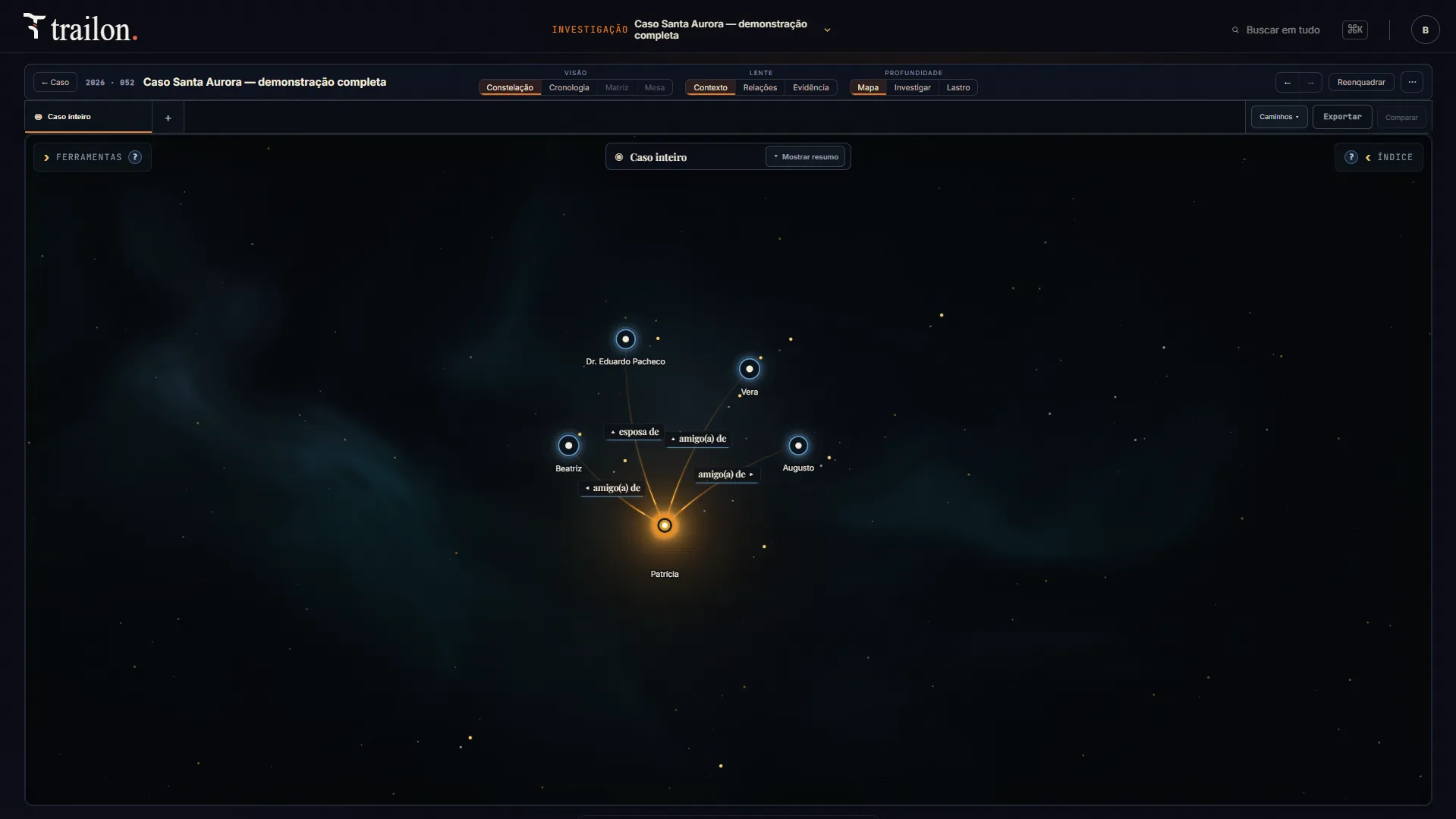
Proceedings organize work. Context can cross them.
An element may appear in another inquiry, unit, or report. Its formal origin remains preserved; the contextual relationship no longer depends on one person remembering it.
Without erasing formal boundaries.
Proceeding, source, unit, and remit remain distinguishable.
Without accidentally starting a separate investigation.
A new line can remain linked to what opened it.
Without confusing absence with nonexistence.
What has not been found remains a gap, not an answer.
What changes in the continuity of an inquiry.
A new team can start from the actual state of the inquiry, not an unstructured folder.
New investigative steps enter an existing structure and meet the readings they change.
Compatible, divergent, and insufficient accounts remain distinct.
Every reading retains a path to original documents, statements, and excerpts.
Lines can open, converge, or end without accidentally becoming unrelated investigations.
Hypotheses, reviews, and decisions retain an explicit status and author.
The investigation advances. What needs to remain visible advances with it.
See how Trailon can organize a long inquiry without replacing judgment, institutional attribution, or investigative decisions.