


ASSET INVESTIGATION
Assets appear in records. Structures appear between them.
A person, a company, or a property may be only the first layer of a structure that changed many times.
Trailon connects people, entities, assets, ownership, and transfers over time—without turning complexity into concealment or a connection into a conclusion.
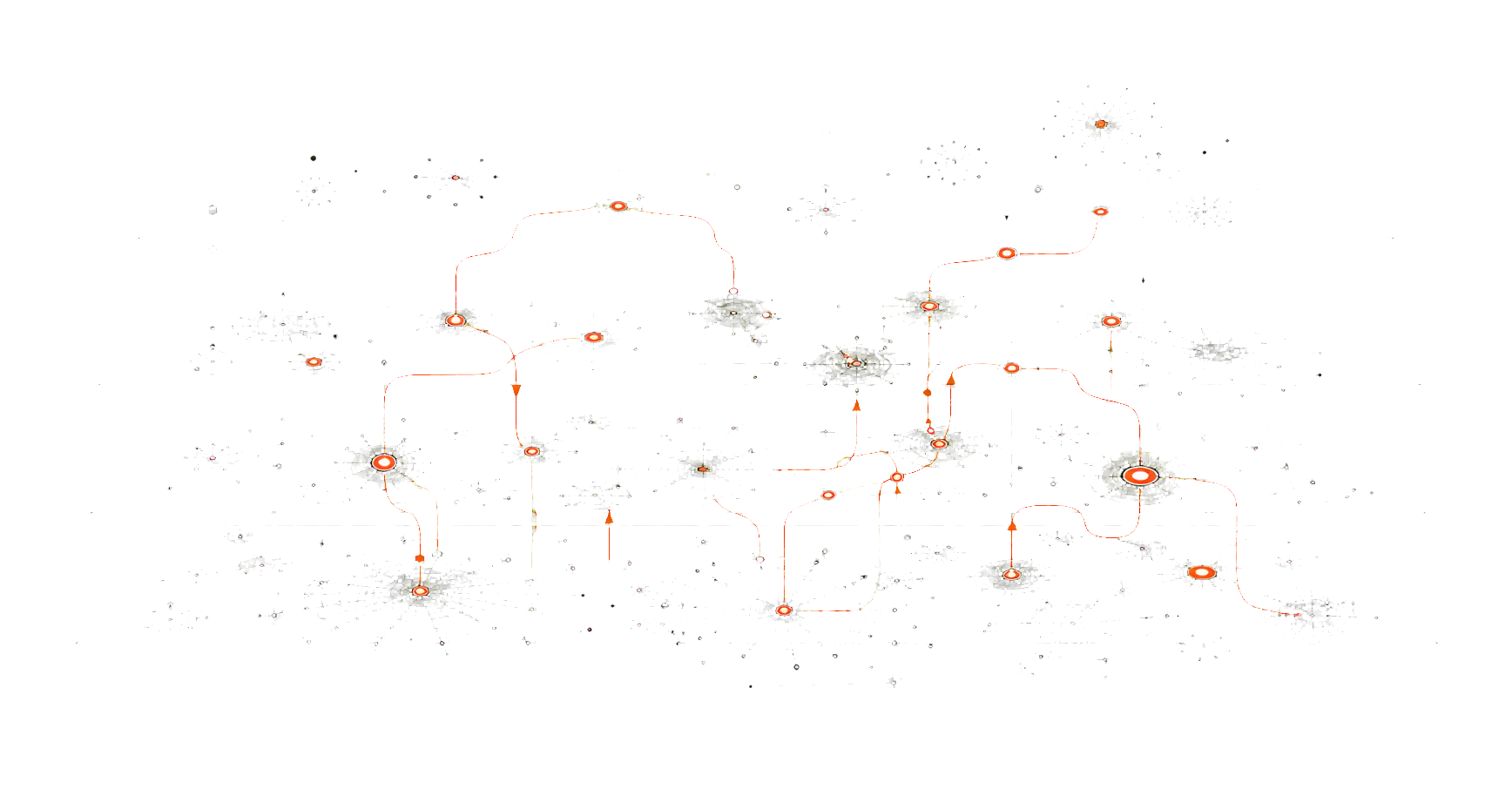
PeopleEntitiesAssetsOwnershipTransfersTime
Questions you can ask directly about an asset structure.
Search crosses people, entities, assets, relationships, and time. It does not stop at the first registry containing a name.
Which entities stand between a person and an interest?
How did the structure change over time?
Which relationships are ownership, management, or contractual?
Which document supports each connection?
Which gaps prevent a conclusion about who controlled what at the time?
Start with a person, company, asset, transfer, or question. Trailon retrieves the relevant part of the structure and preserves a path to each record.
The surface shows names. Investigation begins to reconstruct the layers.
Add records and start the analysis. Trailon prepares entities, identities, relationships, and states over time for review—without presuming control, beneficial ownership, or intent.
Records and sources enter the investigation.
Titles, filings, contracts, registry data, and receipts preserve their origin.
The platform prepares entities, links, and states.
The investigation no longer requires manual assembly from the first record.
Indirect relationships and ambiguities require confirmation.
Automation does not promote an interest to control or a coincidence to a relationship.
Search moves through the prepared layers.
An answer can start from a person, asset, relationship, transaction, or time.
Explore the structure by person, entity, asset, relationship, transaction, or time.
The same material reveals different configurations depending on the starting point, while each relationship stays linked to its origin.
By person
Explore companies, interests, roles, assets, and transfers associated with an individual.
By entity
Examine a company’s ownership, managers, transactions, and changes over time.
By asset
Reconstruct registered ownership, transfers, contracts, security interests, and related events.
By relationship
Distinguish ownership interest, management, contract, power of attorney, and contextual link without presuming control.
By transaction
Follow a value and examine the actors, documents, and assets surrounding its movement.
By time
Compare earlier states without inventing a structure that never existed all at once.
An ownership interest is not control. Proximity is not title.
A relationship may be corporate, managerial, contractual, economic, or merely contextual. Trailon preserves those differences so the structure can be examined without meaning the sources do not support.
Relationships without time can create a structure that never existed.
TITLE IS A RECORD
It shows who appears formally and at which time.
CONTROL NEEDS SUPPORT
Interests, management, and rights are not automatically promoted to control.
COMPLEXITY IS NOT INTENT
Indirect structures can also be legitimate and need context.
Explore a relationship without losing its nature.
In Trailon, you can navigate actors and connections while preserving records, relationship types, and paths to sources. Position in the field guides exploration; it does not determine ownership, control, or responsibility.
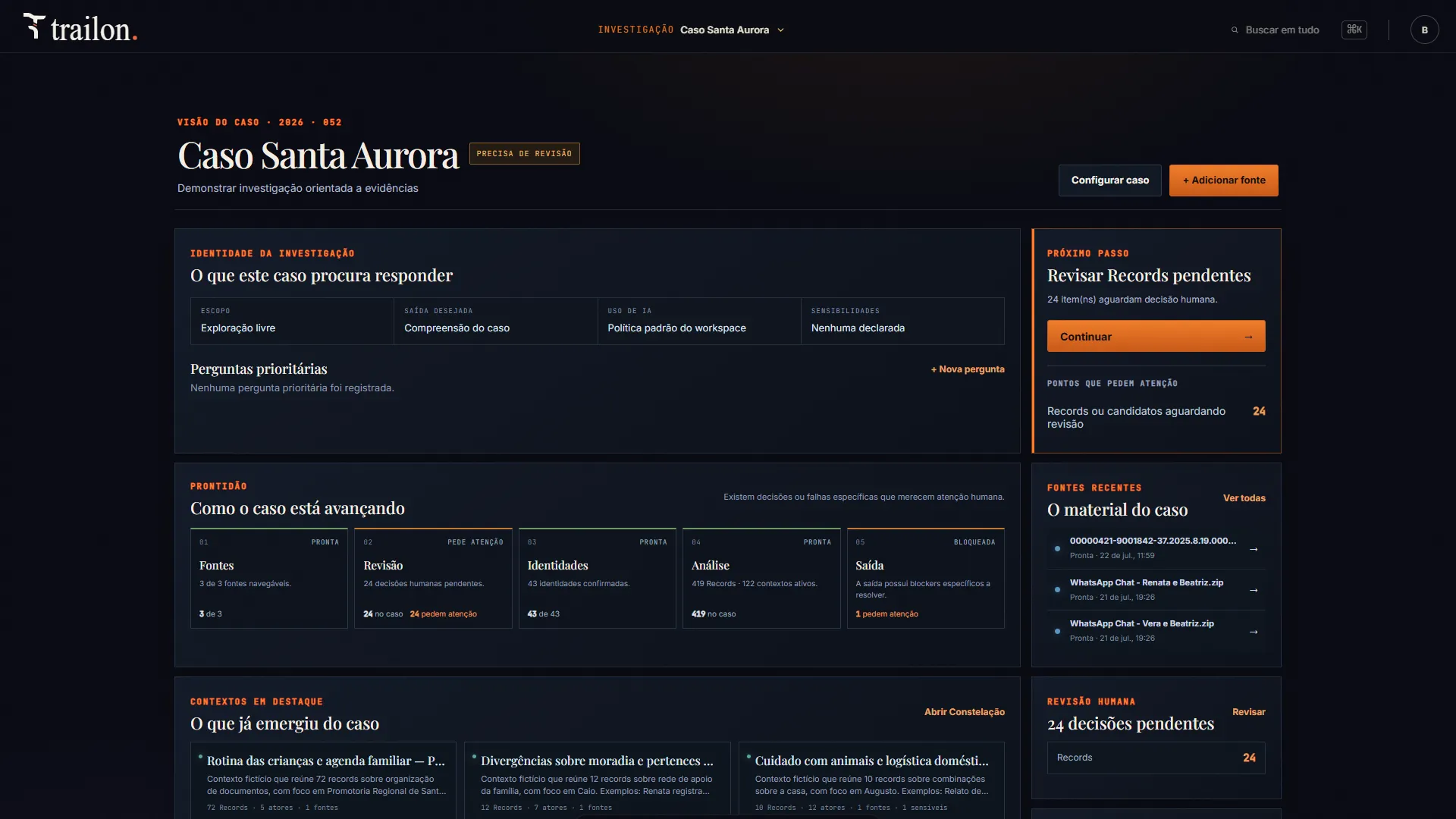
Today’s structure is the result of a history.
Companies are created, changed, and dissolved. Interests change. Assets transfer. Preserving earlier states helps us understand the past without projecting today’s picture onto it.
The asset remains. Relationships change.
The history stays available across acquisition, security, transfer, use, and disposal.
A transfer does not erase the path.
The new title holder does not erase who appeared before or the instruments behind the change.
A new source can reorganize the structure.
A contractual change, title record, or power of attorney meets the relationships it needs to revise.
What changes in an asset investigation.
Analysis does not stop at the first name or record found.
Changes in ownership interests, management, and title remain comparable.
Transactions connect to related documents, actors, and events.
Ownership interest, management, contract, and context remain different dimensions.
An incomplete chain remains incomplete until there is supporting material to proceed.
Every connection can return to the record and excerpt supporting it.
Do not reduce a structure to the name on a record.
Preserve the layers needed to understand how people, entities, and assets came to relate—and what cannot yet be concluded.