


On every call
Search a large volume, resend material, and ask the model to rediscover people, relationships, time, open items, and origin.
When identity, time, relationships, and provenance exist only inside a prompt, every new task must reconstruct the situation before it can work with it.
Trailon creates a persistent contextual layer between company sources and the intelligence that uses them.
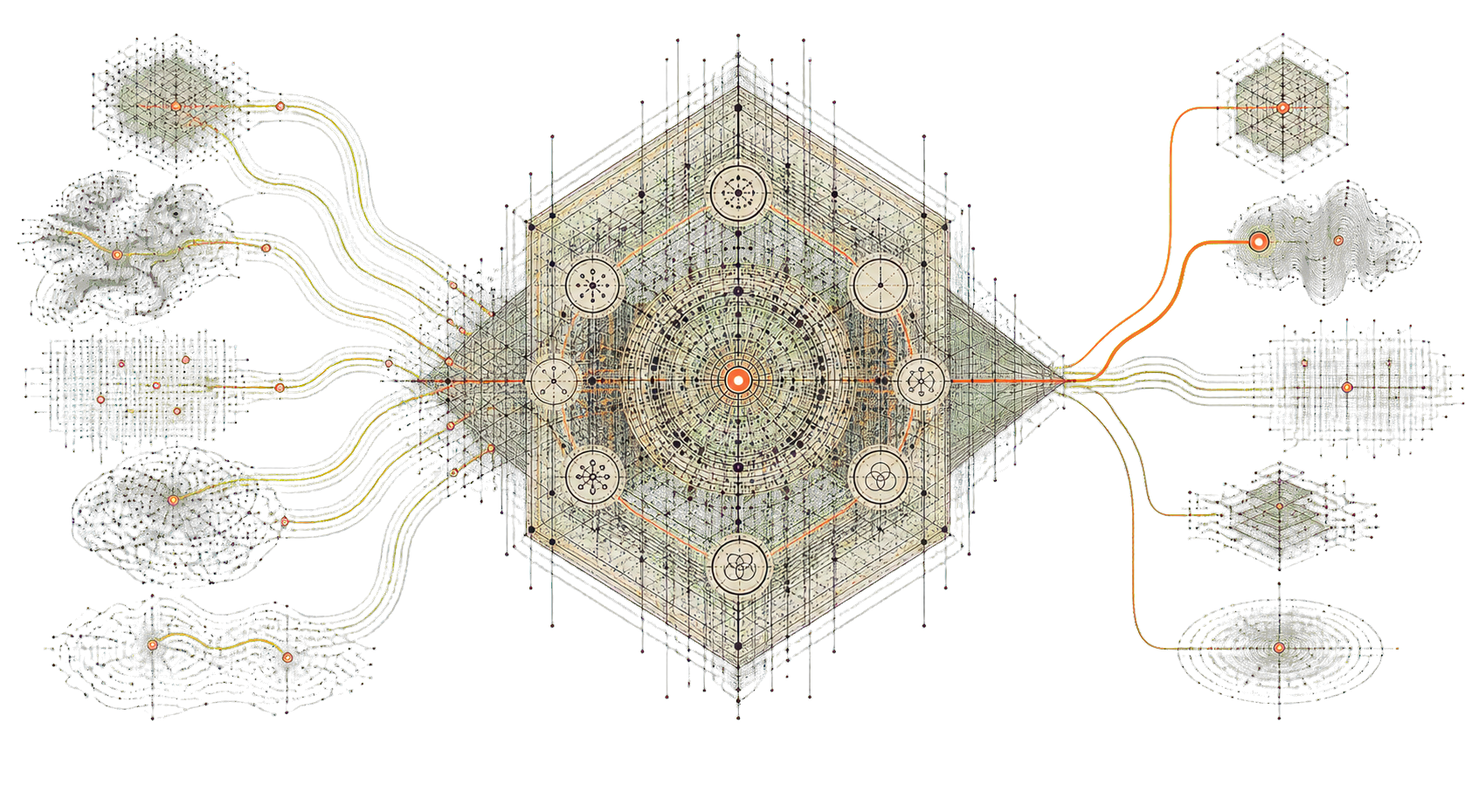
A new answer should not require a company to resend and reinterpret an entire factual context that has already been organized.
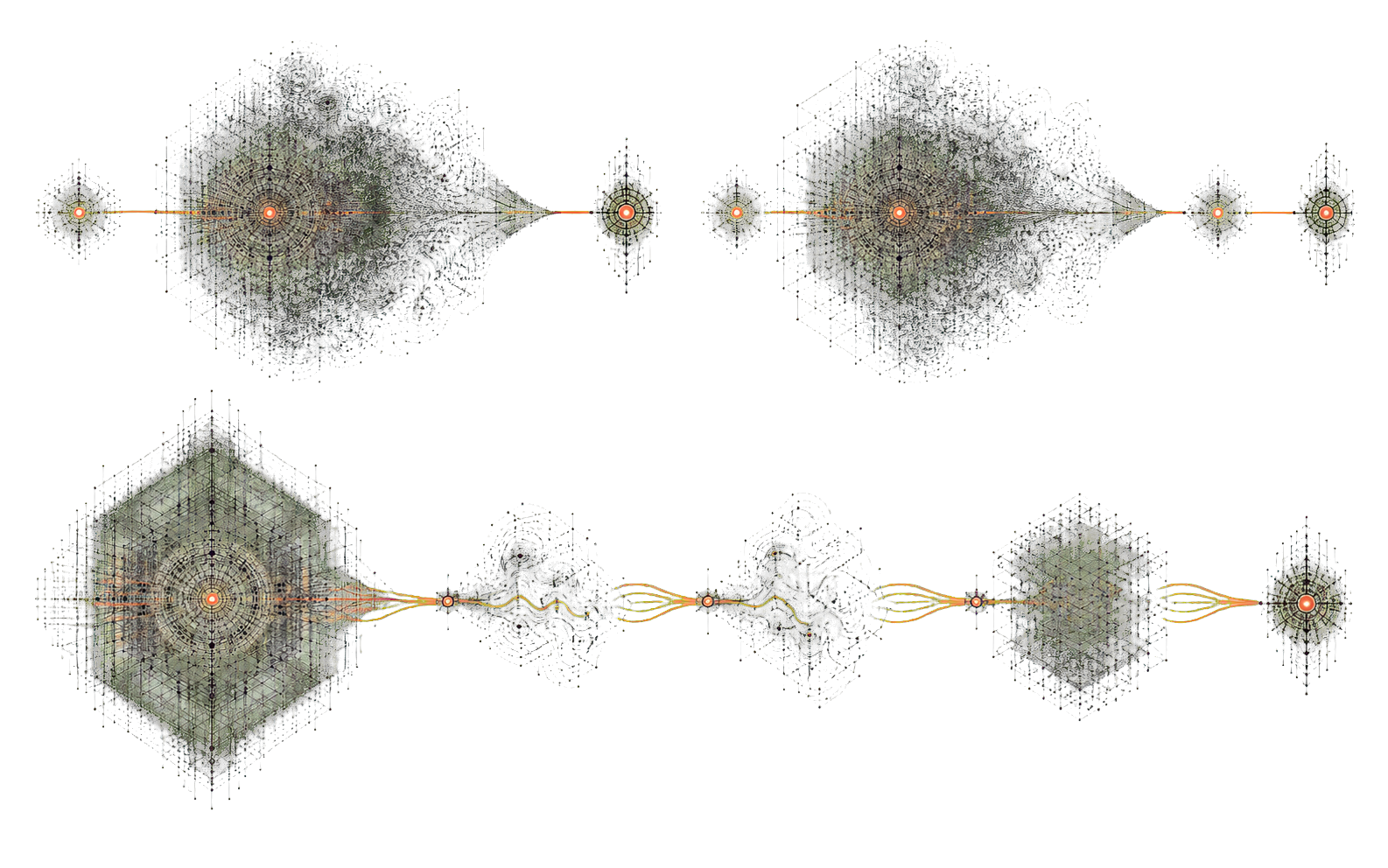
Search a large volume, resend material, and ask the model to rediscover people, relationships, time, open items, and origin.
Retrieve the relevant part of the structure and use generation where language, association, and reasoning add value.
This changes the job of a generative call. The model is no longer the only place where the situation takes shape.
Who is who—and which ambiguities remain open.
When something happened and when it became known.
Which elements remain connected within the situation.
Where each reading comes from and what supports it.
What changed, was revised, or remains open.
Generative intelligence interprets the terrain. It does not need to invent it again for every question.
Search and RAG can locate relevant material. Trailon adds structure that persists across questions, applications, and models.
In Trailon, sources, actors, contexts, relationships, and time can be explored within the same situation. Models contribute without becoming its canonical memory.
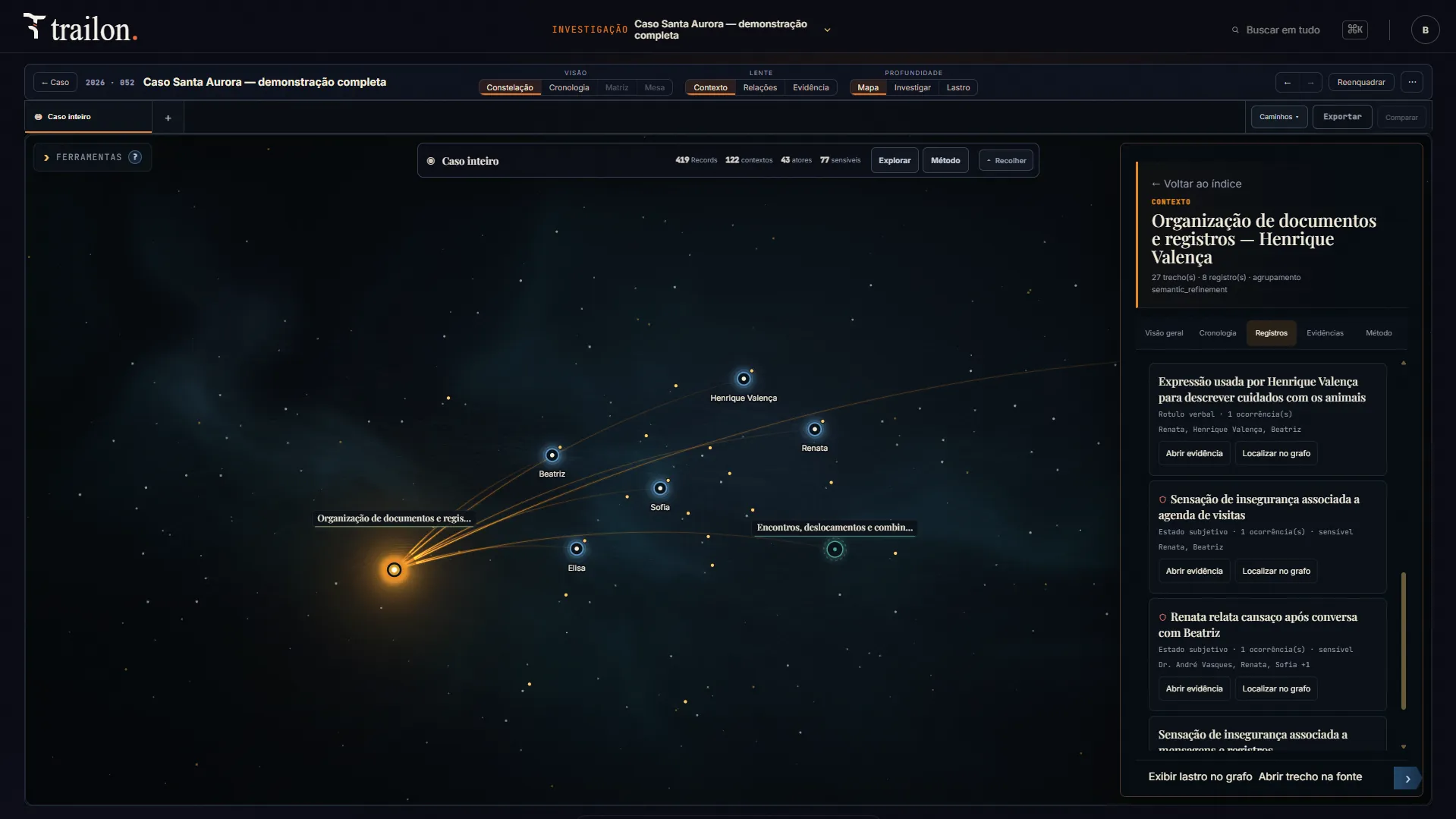
Providers, capabilities, and policies evolve. The architecture separates the intelligence that interprets from the structure supporting accumulated understanding.
Trailon does not need to replace the company’s data lake, CRM, ECM, search, or chosen models. It organizes and preserves the context those applications need.
The task receives the context it needs, not another attempt to reconstruct everything.
Existing structure can be reused across questions and applications.
The situation need not disappear when the provider or model changes.
Instructions guide a task without carrying all factual memory.
Interpretations remain tied to material that allows them to be examined.
The company decides what is structured, retrieved, and sent to a model.
Structure context before generation and give each model only what it needs to interpret at that moment.