


COMPARE ACCOUNTS
When two accounts conflict, you need not decide which one to believe first.
Compare what each person said, when they said it, where accounts agree or diverge, and what the records actually support.
Trailon keeps each account linked to its author, moment, and source—without automatically treating any one as the truth.
AccountAttributionTimeAgreementDisagreementEvidence
Comparing accounts does not mean choosing one too early.
Ask where each account appeared, where they agree or diverge, and which sources allow each claim to be examined.
What changed between one account and another?
Where do the accounts converge?
Which points remain incompatible?
What evidence supports or challenges each account?
What cannot yet be concluded from the available material?
Ask about the whole event. The platform retrieves related accounts and keeps a path to the records that support or limit each answer.
The accounts were saved. Their differences still need reconstruction.
Add conversations, audio, documents, or records and start the analysis. Trailon prepares attributed claims, events, disagreements, and evidence before the next question.
Each item enters with its origin, time, and identity preserved.
An account remains locatable even after becoming part of a larger situation.
The platform prepares available claims, actors, events, and relationships.
Scattered accounts occupy a common field without losing attribution.
Agreements, disagreements, and absences remain available for review.
Automation organizes material; ambiguity and judgment do not silently become certainty.
Search directly across an event and its accounts.
Every reading can return to the accounts, excerpts, and evidence needed to examine it.
The same event can remain surrounded by incompatible accounts.
Understanding does not require a single story too early. It requires preserving each account and the path needed to examine it.
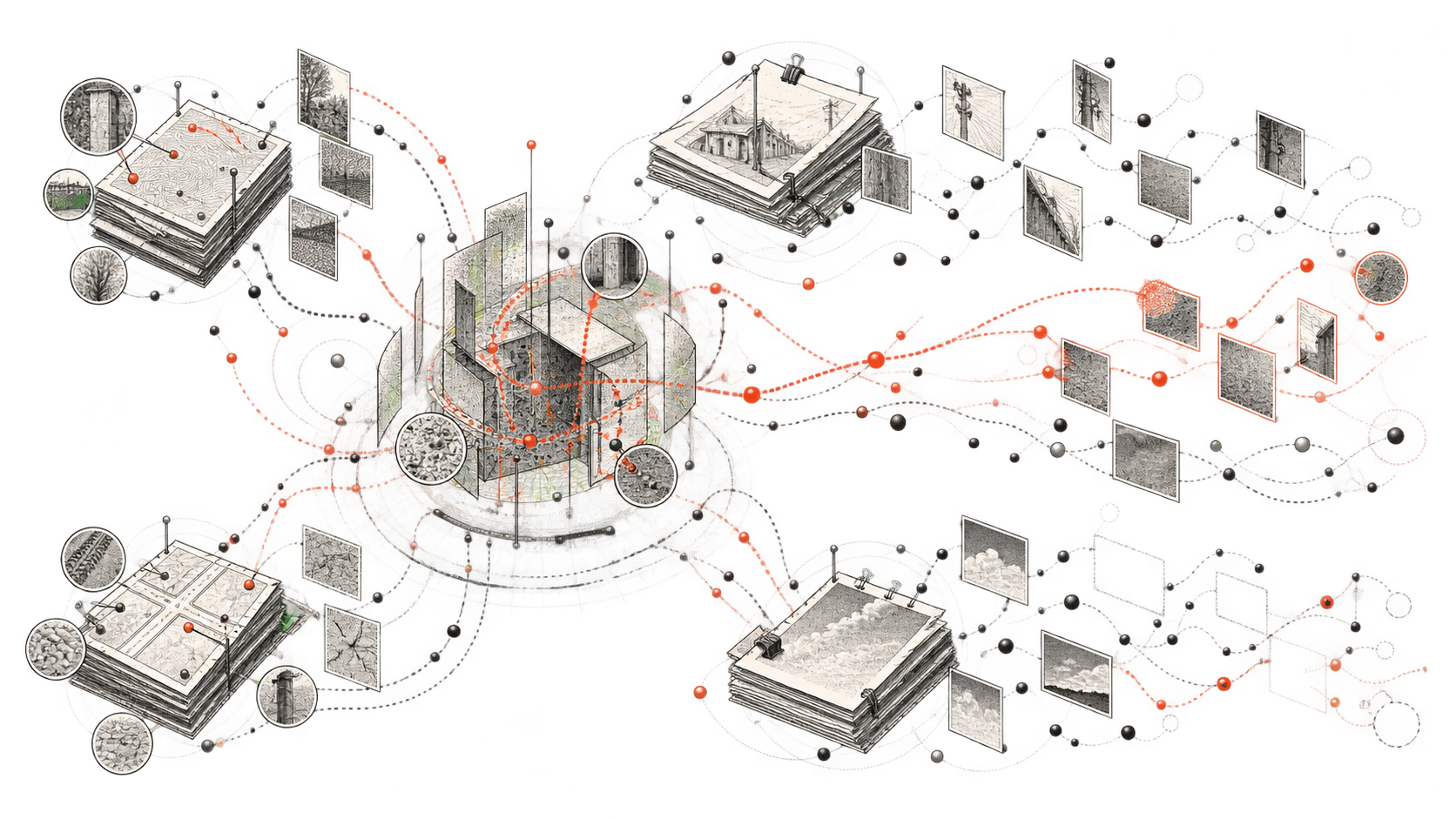
Agreement does not erase attribution. Contradiction does not erase investigative value.
Two people may agree about part of an event and disagree about another. A document may support a date without confirming the interpretation attached to it.
Trailon connects related material without turning proximity, repetition, or fluency into a conclusion.
Contradiction does not prove a lie. Agreement does not prove the truth.
Account, evidence, and conclusion do not occupy the same place.
The system preserves the distinctions needed to reason about the material without making interpretation look like observation.
Claims remain attributed
A claim does not become fact simply because it was structured or repeated.
Evidence has limits
A record may support part of an account without confirming everything inferred from it.
Absence remains open
Not finding an element does not automatically prove it never existed or that an account is false.
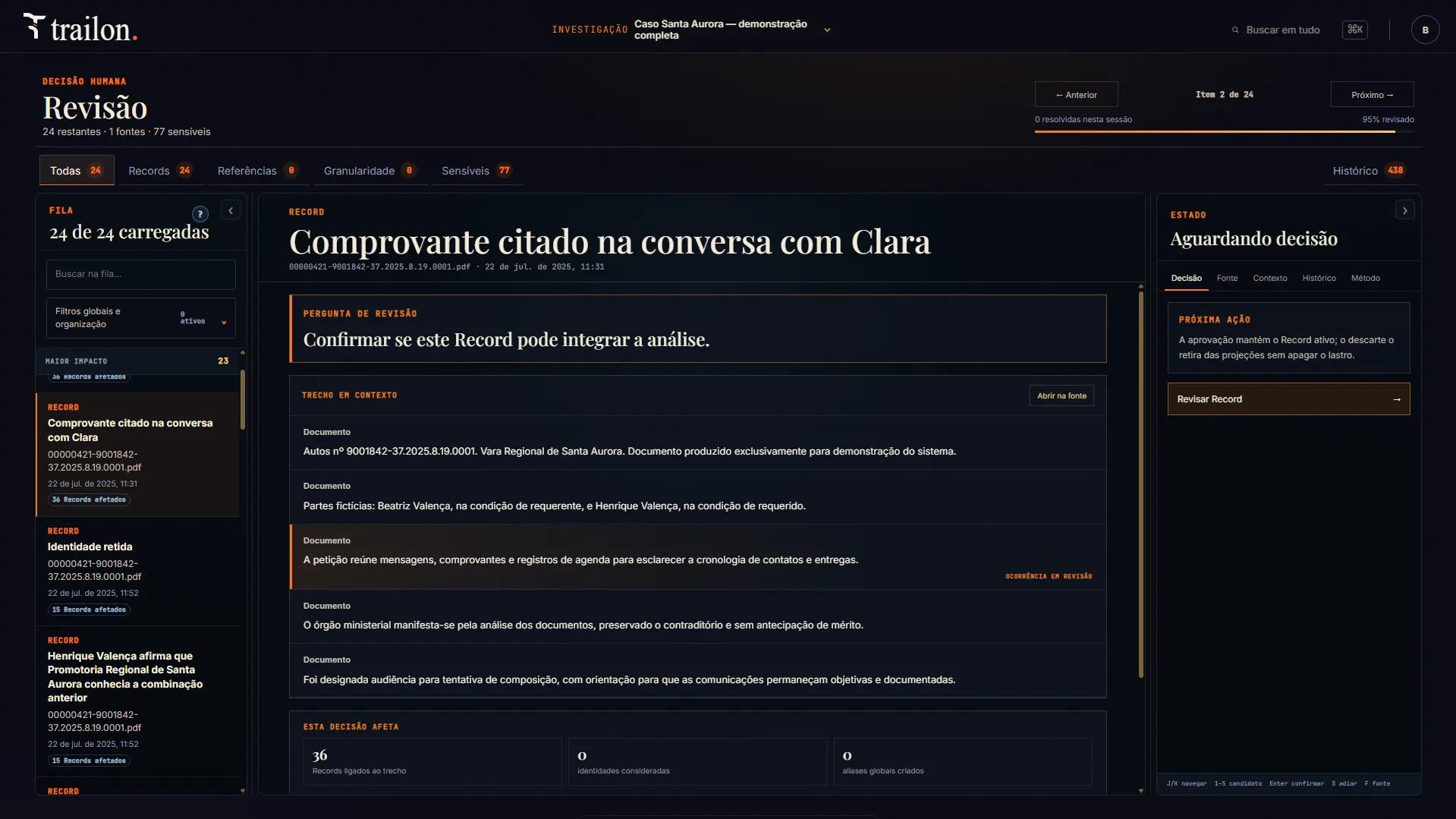
From a reading to an account. From the account to an excerpt you can inspect.
Start with an account, follow related records, and reach the original source without losing attribution, disagreement, or limits along the way.
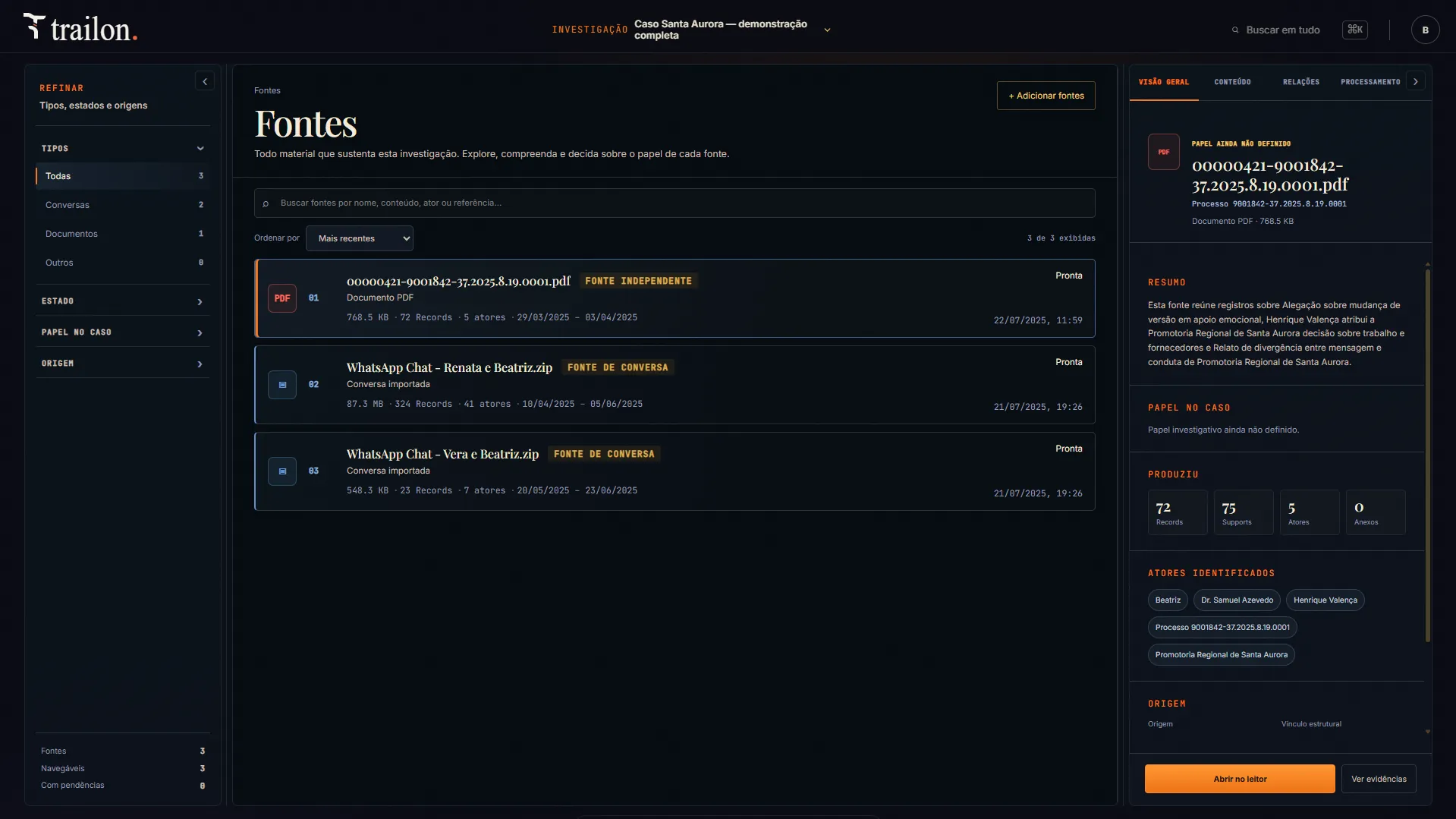
What changes when different accounts no longer compete for memory.
Each account remains linked to its author, time, and source.
Incompatibilities need not be erased for the whole situation to be understood.
What supports or challenges an account can be traced to the original excerpt.
Questions cross accounts, people, dates, and sources without knowing where to search first.
New information can change a reading without pretending an earlier interpretation never existed.
Incomplete or ambiguous material remains a limit, not a convenient answer.
Do not choose a story before you can inspect what supports each account.
See how Trailon can compare accounts, disagreements, and evidence while preserving attribution, uncertainty, and origin.