

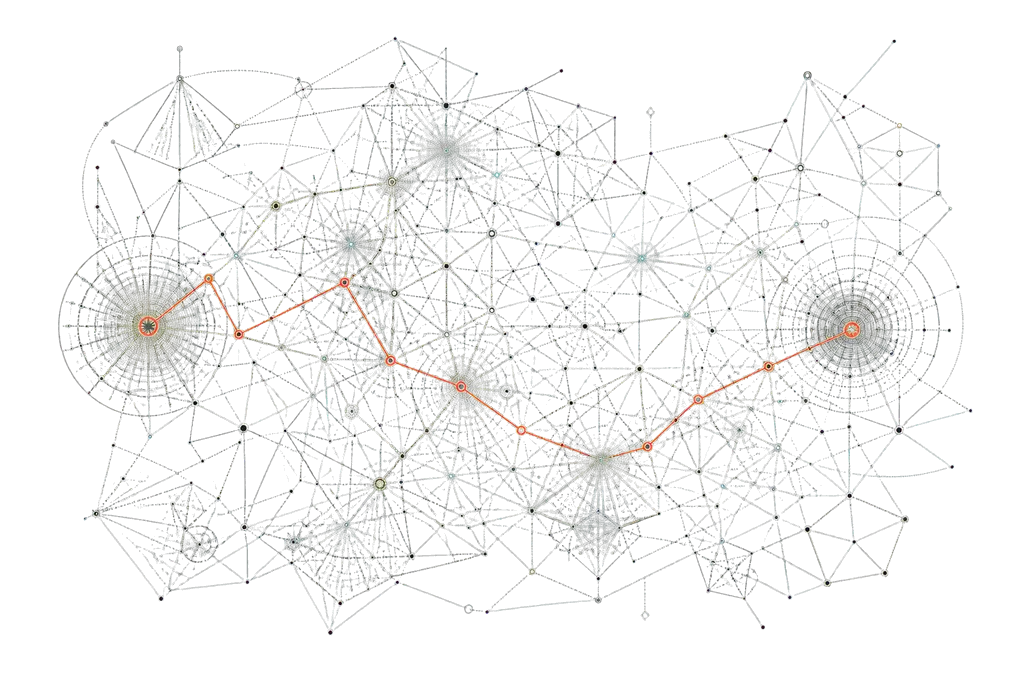
A situation has more than one path.
A timeline orders events by time. A source shows where something was recorded. Search finds material matching a criterion.
The Constellation projects another dimension: the relationships that make a situation navigable.
People, events, records, contexts, and evidence become part of an explorable space rather than isolated items.
A list holds points. A constellation shows paths between them.
Relationships help us find our way.
Understanding a complex situation is not only finding information; it is seeing how its parts connect.
A person may lead to an event, an event to a source, a record to a wider context. Direct and multi-step connections become paths for exploration.
Not only “what is here?”Also “how can I get from here to there?”
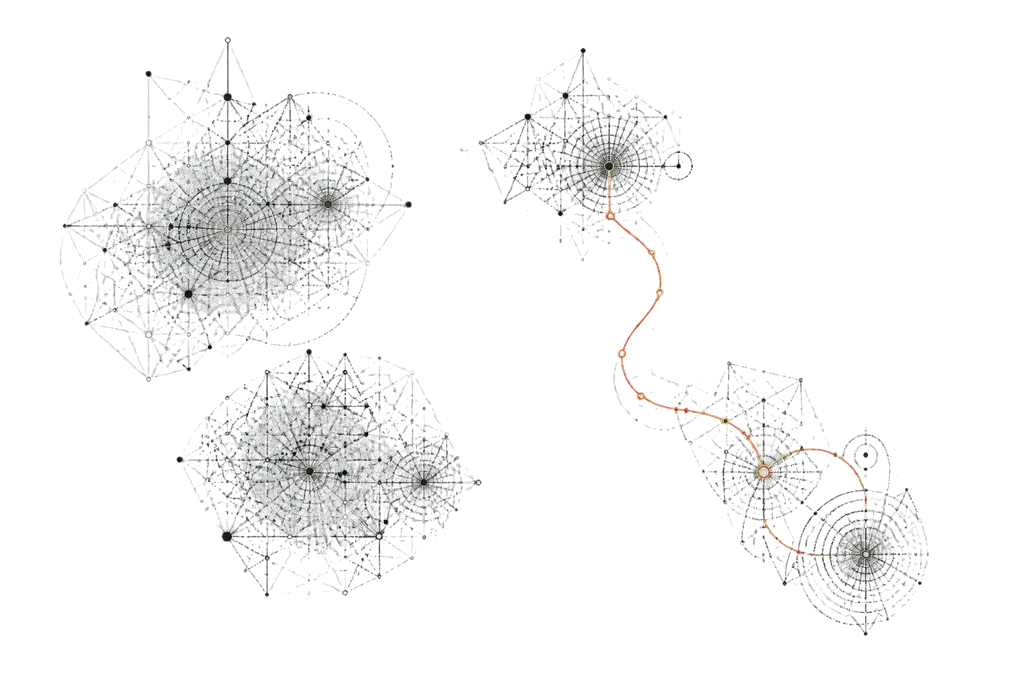
Proximity guides. It does not conclude.
The Constellation’s geometry helps explore represented relationships. It does not assign guilt, determine causation, measure truth, or turn visual proximity into automatic importance.
Position organizes the view; represented connections suggest possible paths. The meaning of each path still depends on its supporting material.
Proximity guides exploration.It does not establish relevance, causation, or truth.
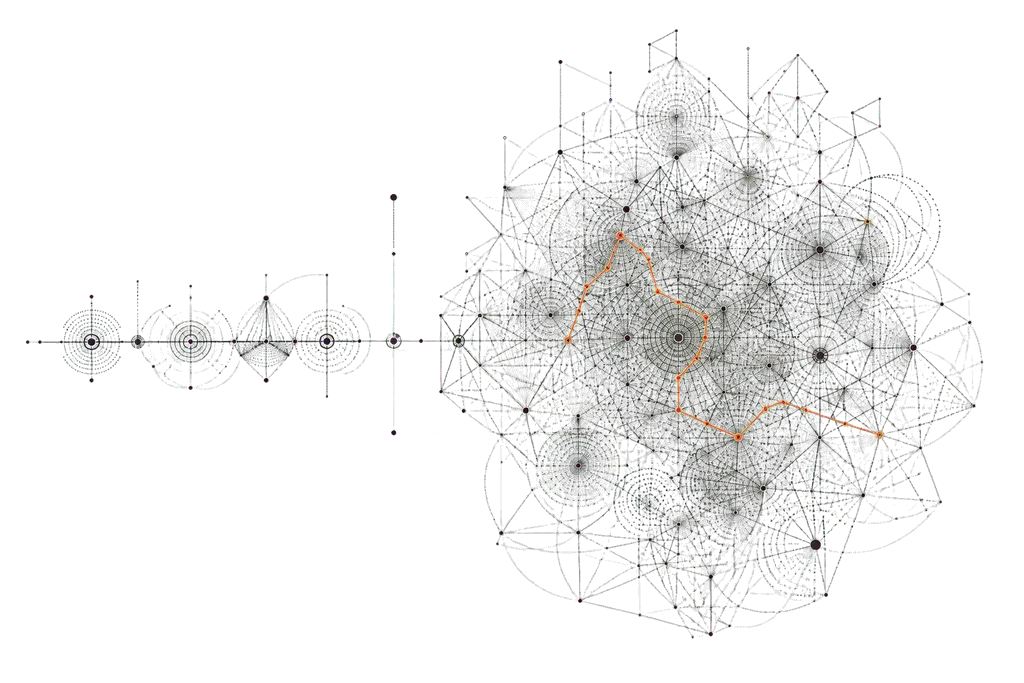
Time and relationship answer different questions.
Events on the same day may belong to different contexts; events months apart may remain related.
A timeline asks when. The Constellation asks what connects, and by which paths. They are different projections of the same situation.
When?What connects—and through which paths?
The center depends on the question.
An investigation can begin with a person, payment, decision, event, company, or document. Each question offers a different route through the same material.
Changing the starting point reorganizes the path without requiring the situation to be reconstructed again. The visual center changes; the underlying structure need not.
The situation remains.The path changes.
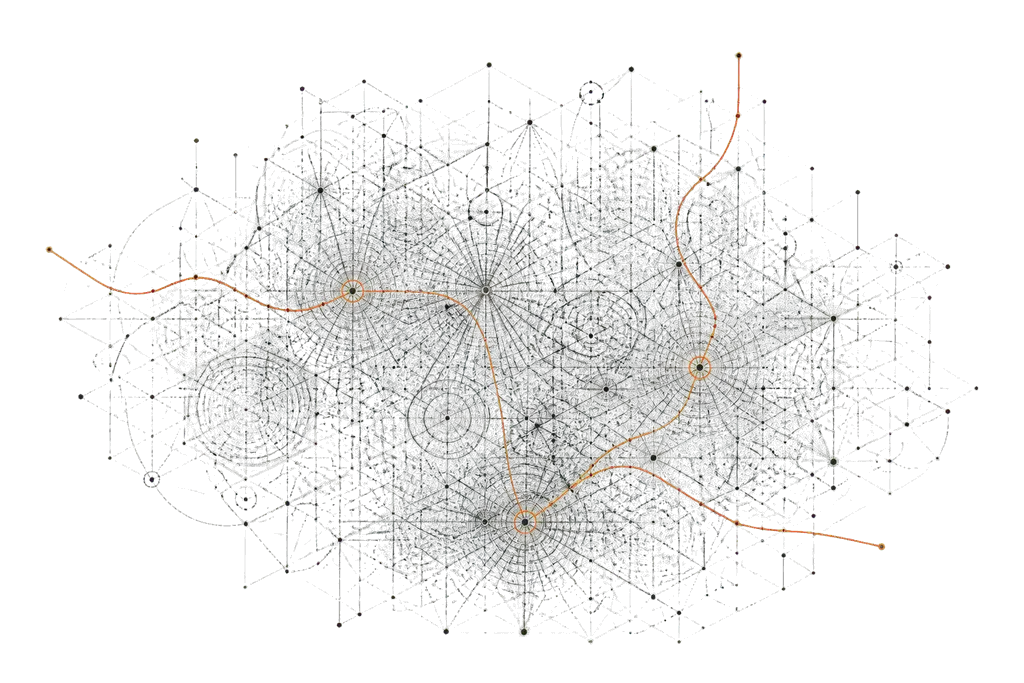
A relationship is not a conclusion.
Seeing two elements connected does not establish why they are connected beyond what the structure supports.
A link may represent participation, mention, shared context, a declared relationship, or another connection in the current projection. The Constellation keeps these meanings distinct rather than turning structure into judgment.
A connection is information.A conclusion requires interpretation.
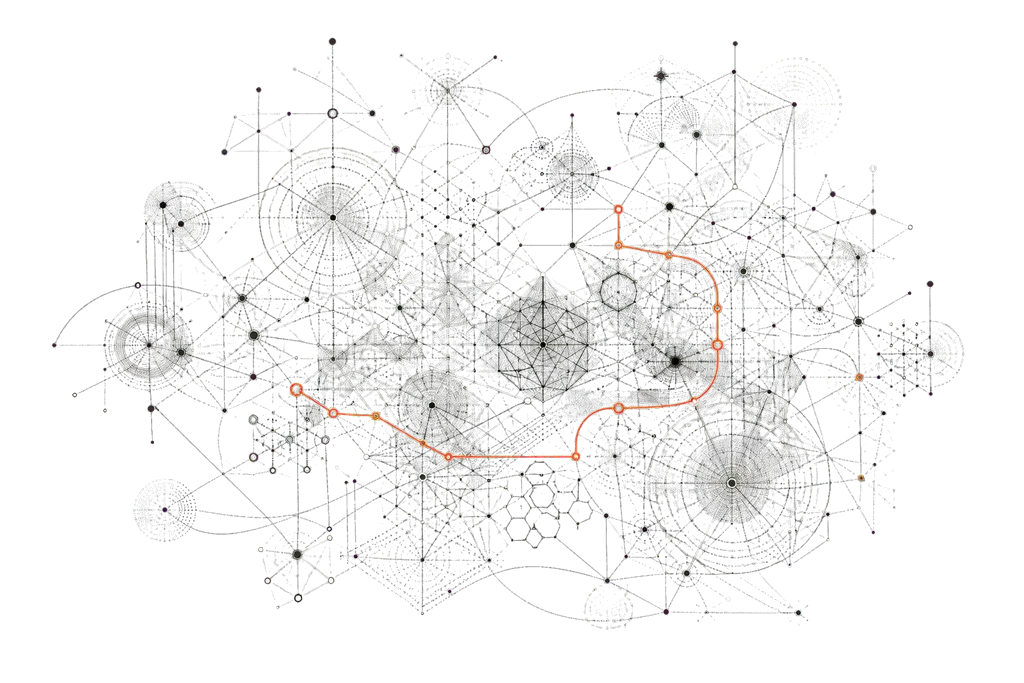
Complexity need not appear all at once.
A large situation may contain hundreds or thousands of elements. Showing everything at once is not the same as understanding more.
The Constellation allows a reader to focus, select, follow relationships, and change the view while retaining surrounding context.
Seeing less can bea way to understand more.
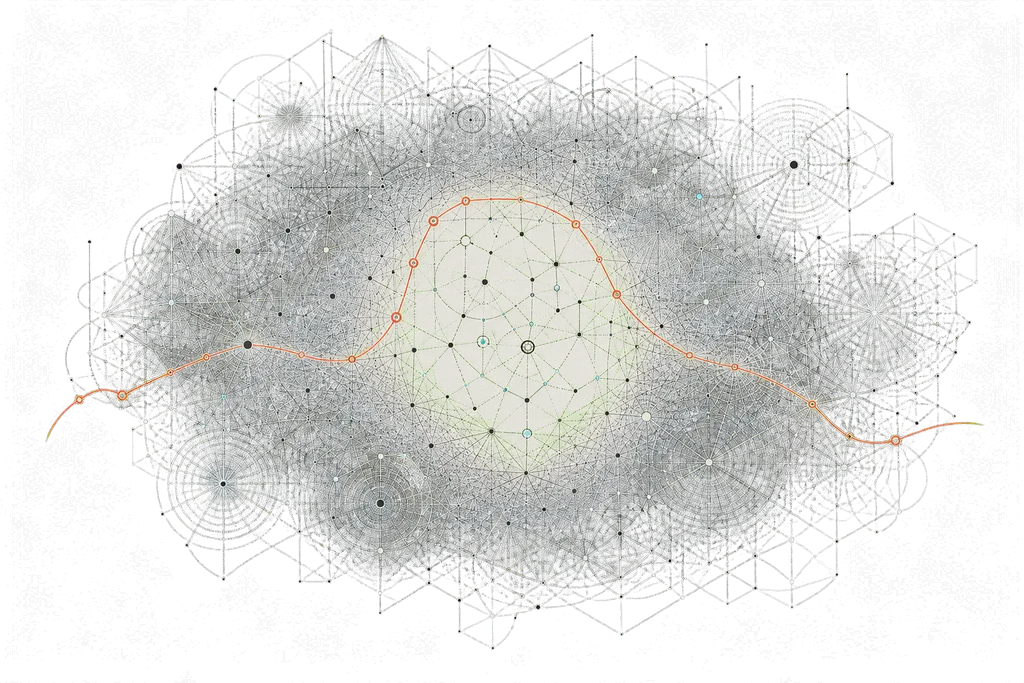
A projection can change without changing the situation.
Filters, focus, starting point, and questions can change which elements and relationships are highlighted.
None of that has to rewrite the structure underneath. The Constellation is one way to observe a Landscape, not the entire Landscape.
An answer is a projection.So is the Constellation.
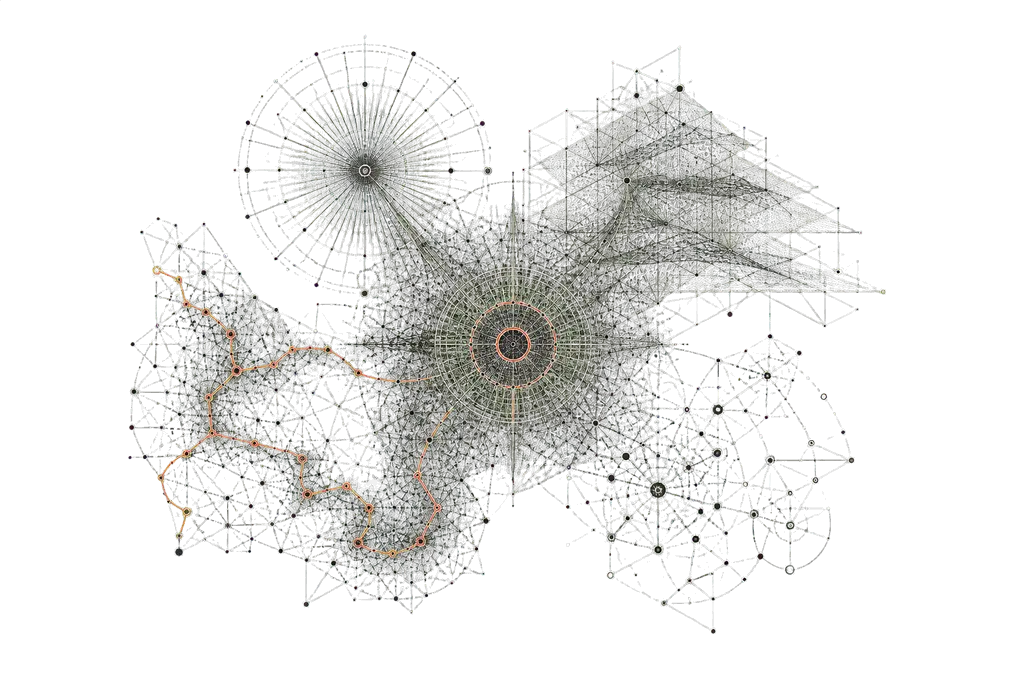
From structure to path.
Context Reconstruction establishes continuity and structure. The Constellation projects part of that structure into an explorable space.
The next question is what supports what we see, while keeping sources, records, interpretation, inference, and decision distinct.