


RECONSTRUCT A PERSONAL HISTORY
Your story happened as a whole. Your records did not.
Conversations, photos, documents, emails, and notes hold pieces of what happened.
Trailon helps you reconstruct the path between them—without replacing the sources with one final version of the story.
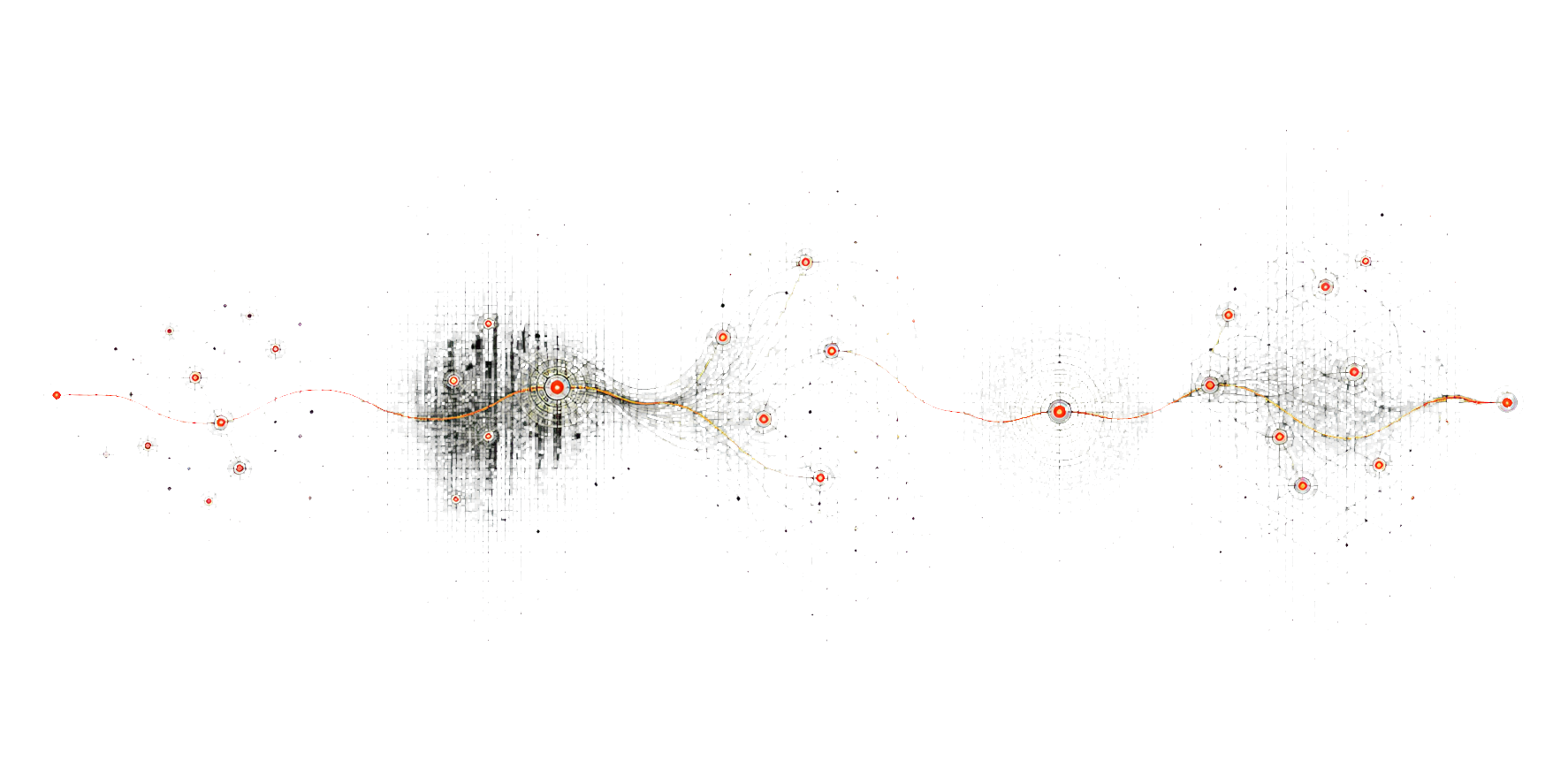
ConversationsEventsPeopleChangesAccountsSources
Questions you can ask directly about your own history.
Search crosses time, people, events, sources, and relationships. You do not have to remember where something was stored first.
Where did I first talk about this?
Had this person appeared before?
What changed after that event?
Which accounts of the same episode exist?
Which conversation, document, or record supports this memory?
Ask the story, not just the files. The platform retrieves available context and keeps a path to each original conversation, record, or excerpt.
Your records are saved. The story between them still needs reconstruction.
Add material and start the analysis. Trailon prepares time, people, events, themes, and continuities for review before the next question.
Conversations, documents, audio, and notes enter with their origin preserved.
Each source keeps its identity, format, and location so it can be found again.
The platform prepares time, people, events, and relationships.
Separate elements begin to form a path without manual assembly for every reading.
Identities, accounts, and ambiguities remain available for confirmation.
Automation organizes material; what requires judgment remains visible to you.
Search directly across the whole collection.
You can follow an answer back to sources, excerpts, and records that support or challenge it.
A story has more than one path.
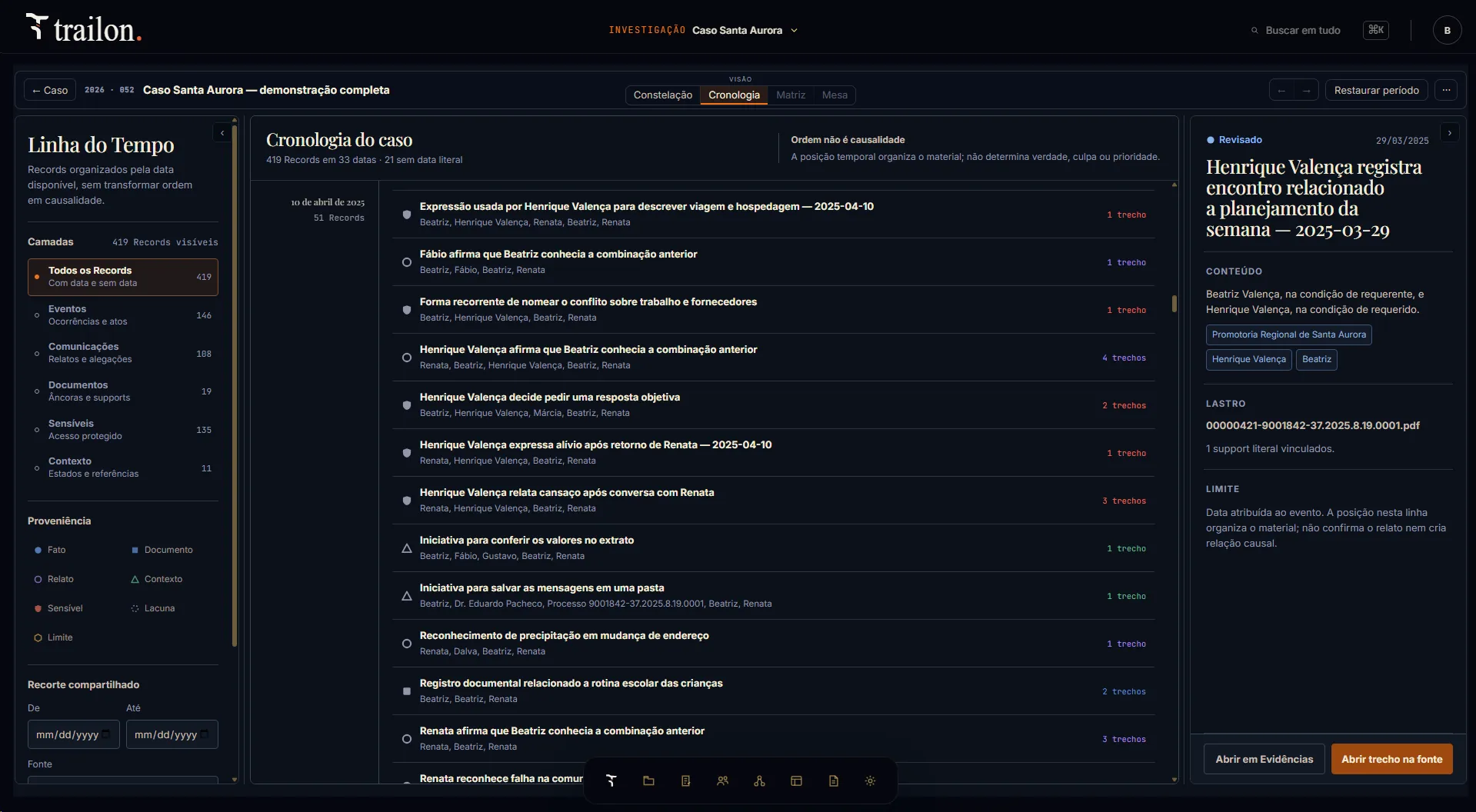
The same material can be explored by time, theme, person, event, account, or source. The starting point changes; the reconstructed path remains available.
By time
Follow events, changes, gaps, and resumptions without assuming temporal proximity creates context.
By theme
See when a topic appeared, disappeared, returned, or came to mean something else.
By person
Explore appearances, conversations, relationships, and events linked to someone.
By event
Start with an episode and find the sources, people, and accounts that came to describe it.
By account
Compare what was said at different moments without erasing disagreement or changes in the story.
By source
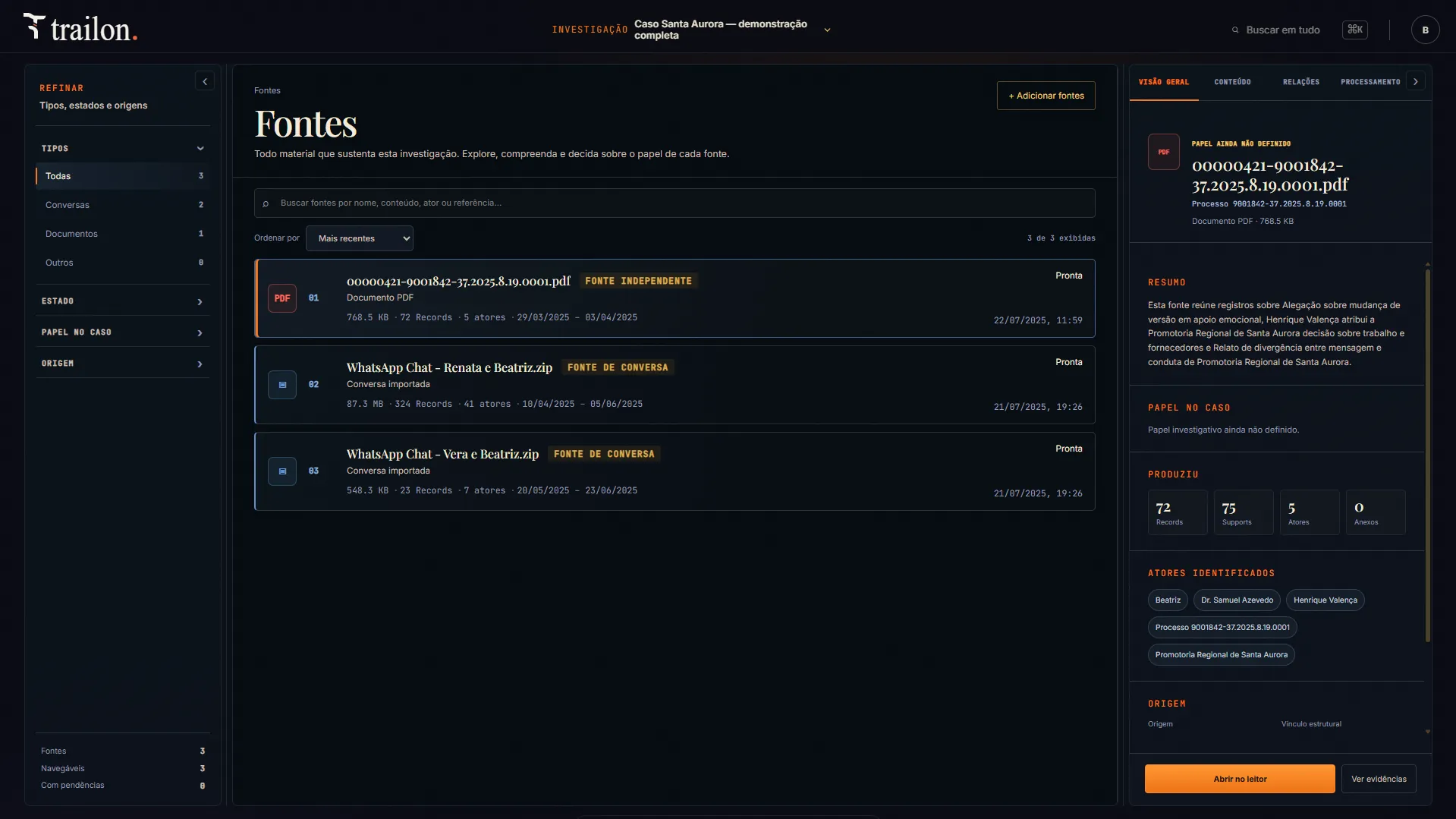
Trace a reading back to the conversation, audio, document, or original excerpt supporting it.
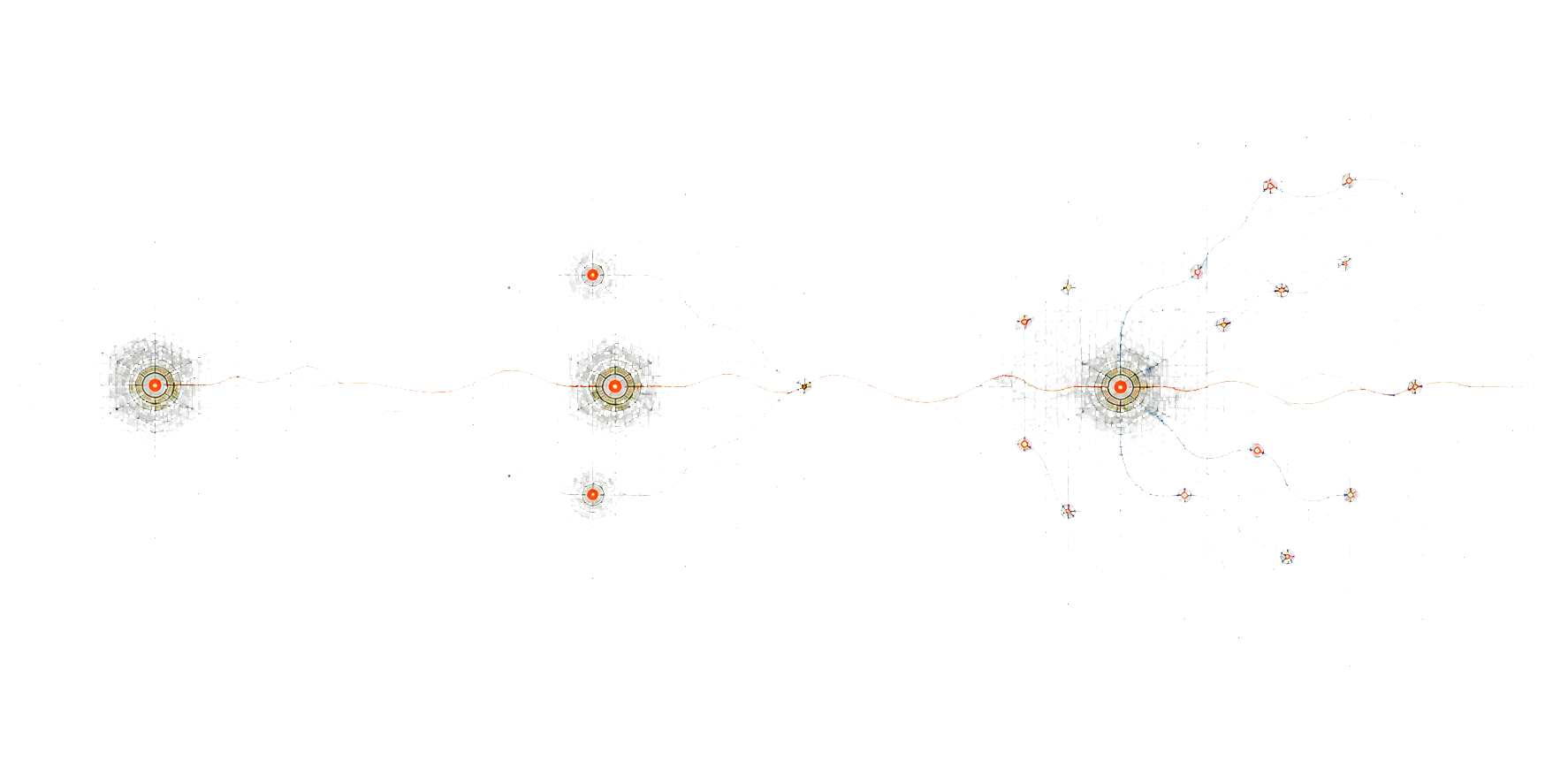
The past does not change. Accumulated context can change how we read it.
An older record may seem isolated. As other events arrive, it may become the start of a pattern, a turning point, or simply a memory to reconsider.
The record remains. Relationships around it can evolve.
Connecting is not filling the gaps.
A story can remain structured even when parts are missing, accounts diverge, or an interpretation lacks sufficient support.
Absence remains absence
Not finding a conversation does not prove it never existed.
Disagreement remains visible
Two accounts need not be reconciled before there is material to do so.
Interpretation remains identified
A reading can evolve without masquerading as an original record.
See the history without losing where each part came from.
The timeline organizes events and states. Sources preserve original material. Every reading can remain linked to the record and excerpt that made it possible.
Your story is useful only if it remains under your control.
Privacy, access, and origin are not footnotes when the material is your own history.
Access Authorized people and explicit boundaries.Origin What entered and where it came from remain visible.Review Readings can be corrected without rewriting the source.Continuity The path remains available for new questions.
Explore securityWhat changes when the path no longer depends on memory alone.
Find something by meaning even when you cannot remember which conversation or file contained it.
Separate events become more than isolated memories.
Accounts, themes, and relationships can be compared across moments.
Every reading remains linked to the material and excerpt that made it possible.
What has not been found stays open rather than being filled by a plausible answer.
A new question can build on what has already been reconstructed instead of starting over.
You need not remember where every piece was stored to find the whole story again.
See how Trailon can turn separate records into a searchable, reviewable path connected to sources.