


“Collect everything and write a story.”
- logs in one tool
- decisions in chat
- changes in tickets
- memory in interviews
Logs show states. Tickets record symptoms. Chats hold decisions. People remember parts. Procedures describe what should have happened.
Trailon organizes signals, conditions, actions, consequences, and hypotheses so an analysis does not need to choose a convenient cause before reconstructing the event.
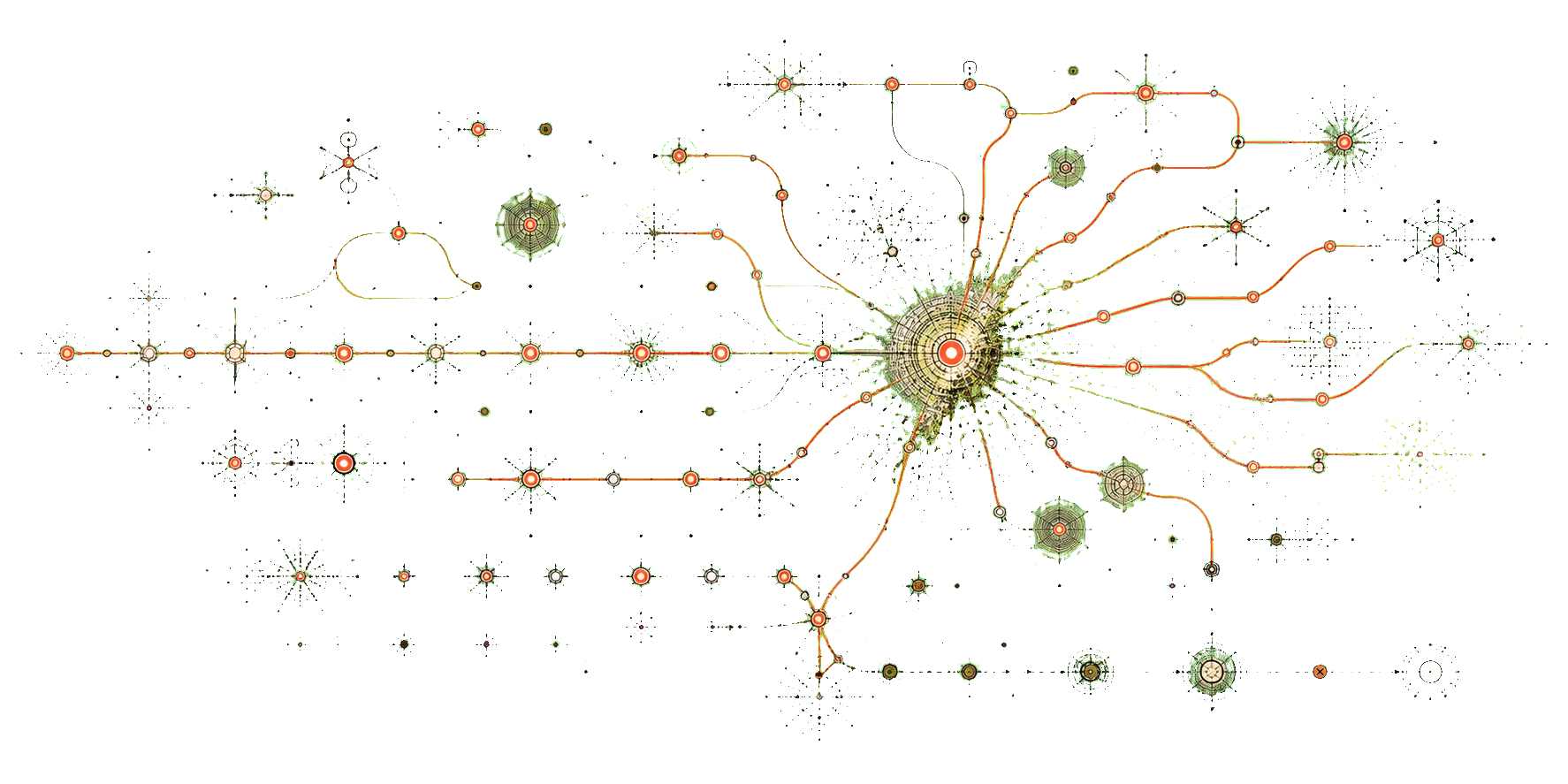
The technical timeline, operators’ perceptions, and response decisions may diverge—and still belong to the same incident.
A plausible cause ends a meeting. A verifiable cause supports learning.
The same situation can be explored backward from a symptom, forward from a change, or through actions taken during the response.
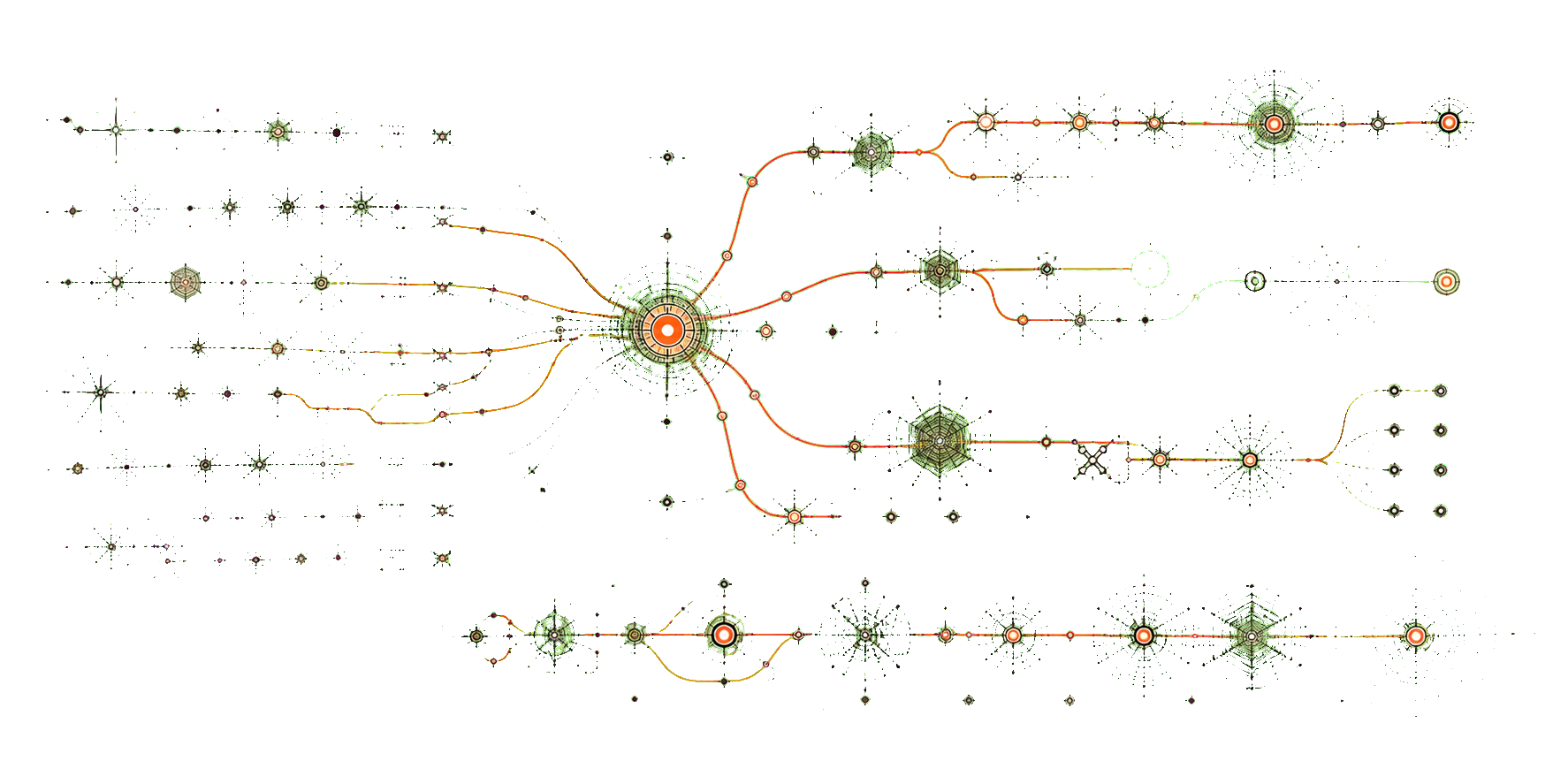
What happened and when its impact became observable.
States, changes, and signals existing before the disruption.
Who did what, with which information, and when.
How consequences crossed components, processes, and customers.
Competing explanations retained as hypotheses.
What supports, challenges, or still limits each reading.
A change before an incident may matter. Correlated signals may guide inquiry. Neither should become the cause just because it makes for a neat story.
Independent elements converge along a verifiable path.
There is a line of inquiry, but conditions or evidence are still missing.
New records limit or contradict the earlier explanation.
In Trailon, people can explore events, open related records, and return to source material during review.
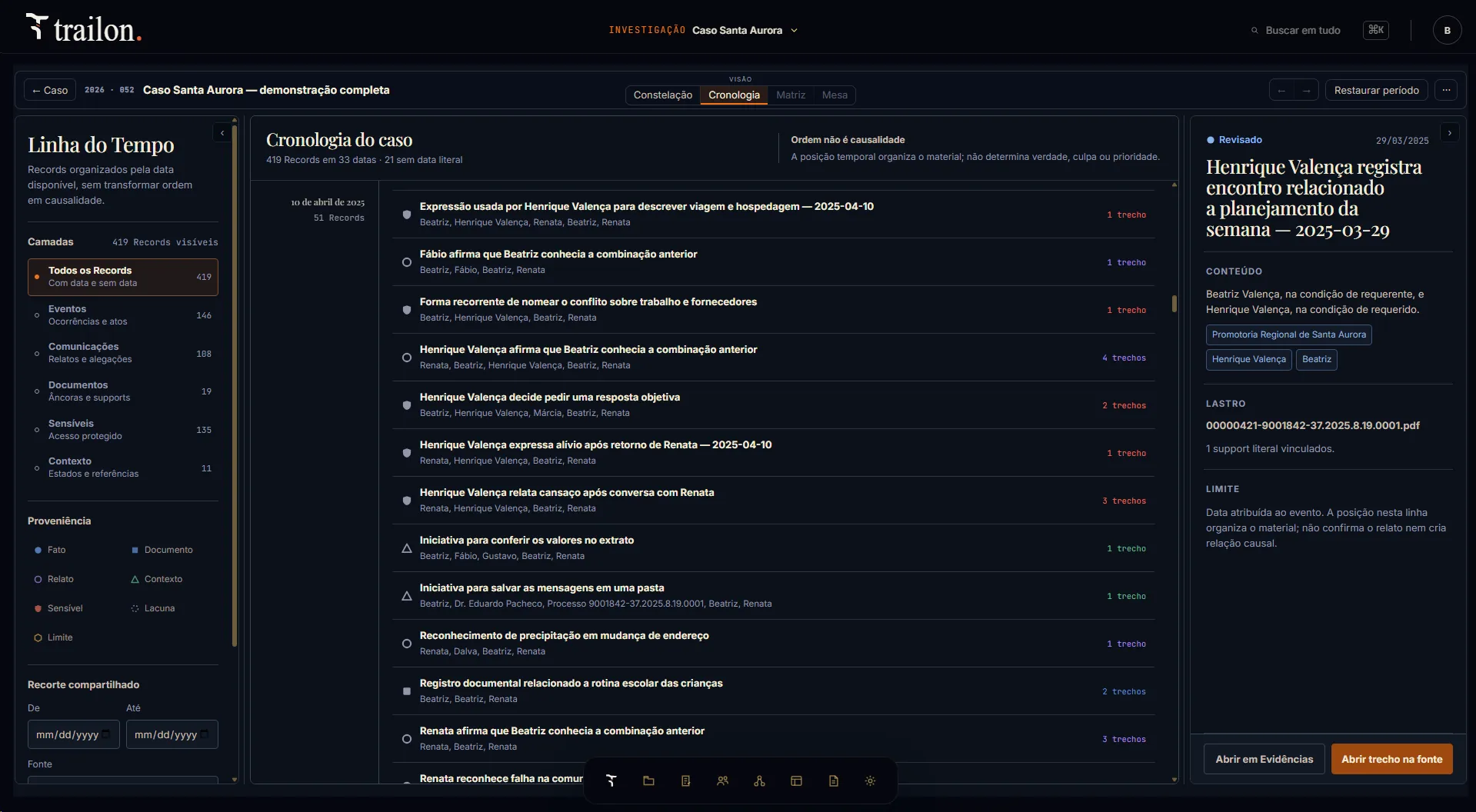
Logs, APM, SIEM, tickets, deployments, chat, and documentation stay where they are. The situation emerges when they can be examined together.
Logs, tickets, chats, and changes can form one navigable path.
Competing explanations do not become one story too early.
Actions and decisions during the incident remain tied to their moments.
Effects can be explored across components and operations.
Absence of a record is not confused with evidence of absence.
The reconstruction remains available for future incidents and changes.
Give engineering, operations, security, and quality a shared situation to reconstruct, challenge, and learn from.