


- legal name
- Brazilian tax ID (CPF)
- email and phone
- unnecessary identifiers
SENSITIVE DATA AND AI
Minimize identifiers. Preserve context.
Your AI may need to understand what happened without receiving names, documents, or identifiers that the task does not require.
Trailon separates identity from context and applies the appropriate transformation before a generative call—preserving entities, relationships, time, and provenance.
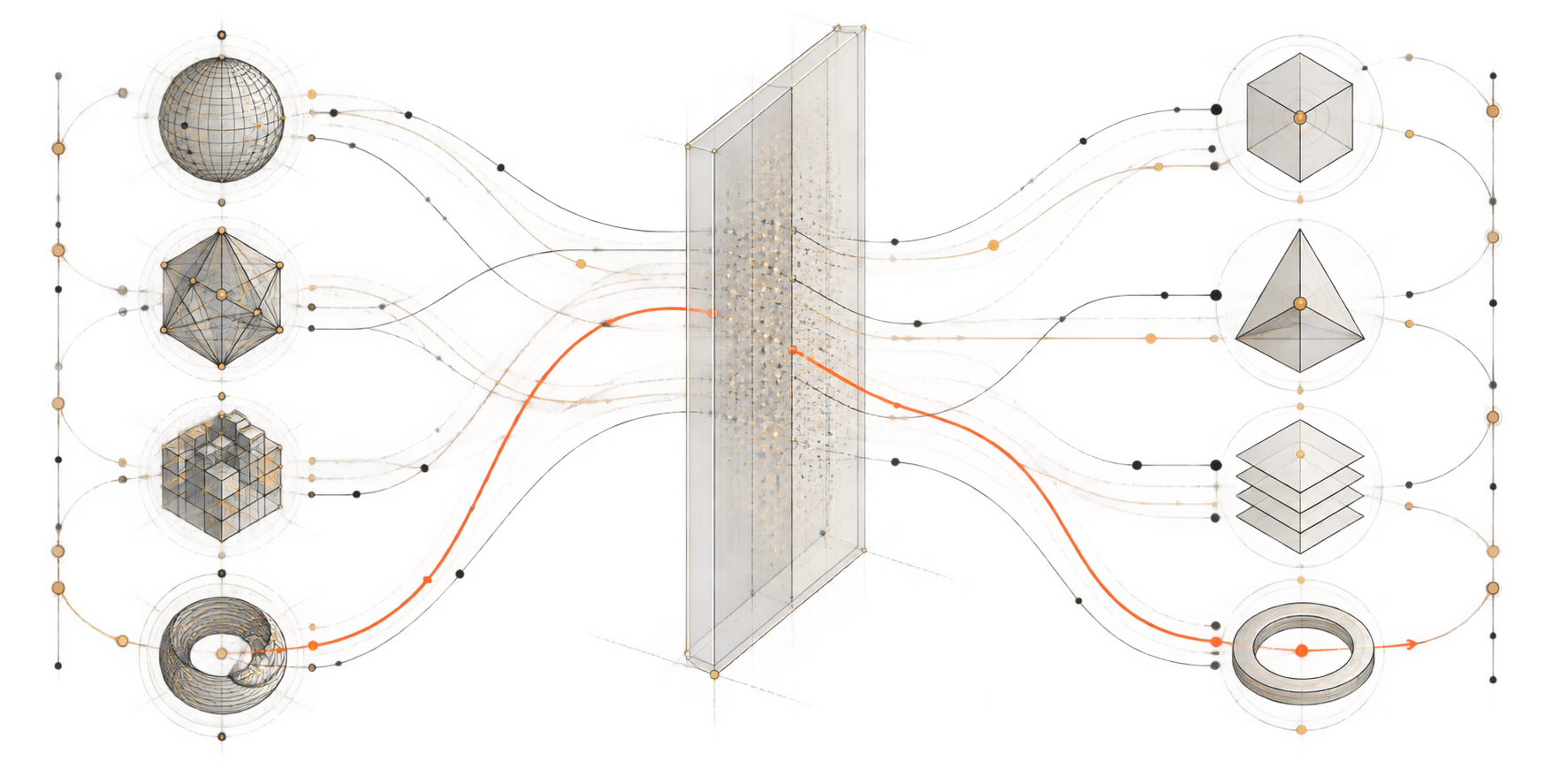
RedactionMaskingPseudonymizationTokenizationAnonymizationControlled reconstruction
Send less data. Preserve more meaning.
Reducing identifiers need not impoverish AI input. Trailon can separate what identifies a person from what makes a situation understandable—maintaining continuity across sources, relationships, events, and time.

- which references identify the same entity
- who relates to whom
- roles, sequence, and time
- events and cross-source references
- provenance
The data can be reduced.
The structure need not be.
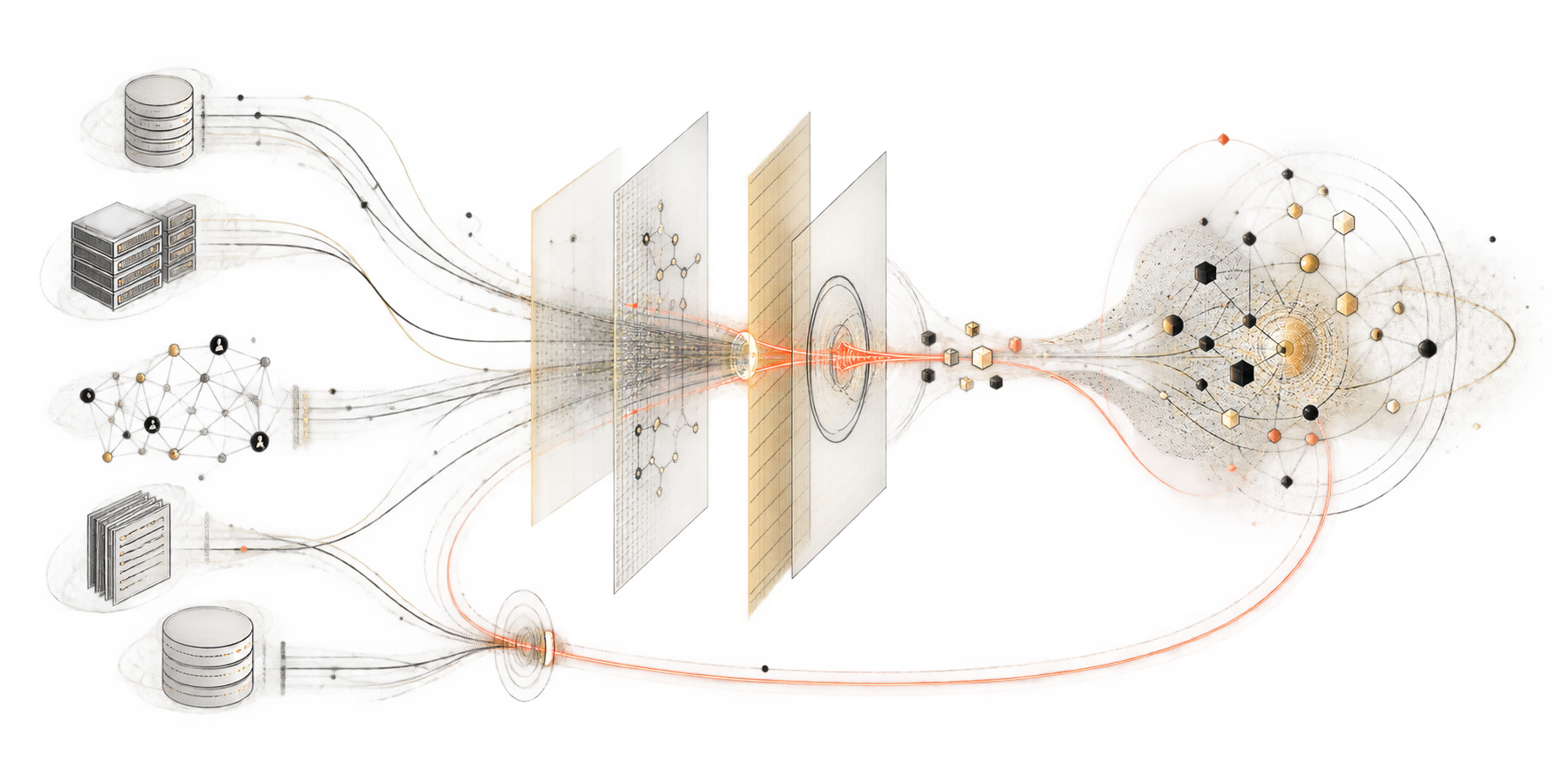
The call receives a projection of context, not a copy of the corpus.
Policy determines which identifiers remain, which are transformed, and which structure the task still needs. Canonical material remains in Trailon; only the authorized projection crosses the boundary.
Resolved identity
The same person or organization remains distinguishable across sources even after transformation.
Purpose-based policy
Each task can receive only the level of identification it actually needs.
Preserved relationships
Links, authorship, sequence, and references remain readable to people and models.
Minimized context
The excerpt sent to a model can exclude identifiers and material unrelated to the task.
Traceable transformation
The execution records which treatment was applied without silently changing the canonical source.
Controlled reconstruction
When policy permits, an output can be matched back to an identity within the secure boundary.
DIFFERENT TREATMENTS, DIFFERENT EFFECTS
Anonymization, pseudonymization, and masking are not synonyms.
The correct term depends on reversibility, re-identification risk, additional information retained, and reasonably available means.
Anonymization.
Aims to prevent direct or indirect association with a person using reasonably available technical means.
Pseudonymization.
Replaces an identity while keeping the additional identifying information separate, controlled, and secure.
Masking and redaction.
Suppress or reveal only part of the data; they do not automatically make material anonymous.
PRESERVED SOURCE
The model receives an authorized representation. The origin remains.
Originals, records, and context remain in the workspace. The generative execution works with the excerpt and treatment specified for that purpose.
Your systems and models stay where they are.
Trailon sits between internal sources and the intelligence that uses them: it selects context, applies policy, and records what crossed the boundary.
DocumentsCRMTicketsEmail and chatData lakeLLMs
What changes before the call.
Less unnecessary exposure
A generative call can work without identifiers that add no value to the task.
More useful context
Protection need not erase relationships, time, authorship, or continuity across documents.
Consistent entities
The same entity remains distinguishable across authorized sources and occurrences.
More targeted retrieval
A task receives authorized context instead of a raw, indiscriminate corpus.
Reviewable policies
The treatment applied can remain linked to the execution, provider, and purpose.
Interchangeable models
The contextual structure remains in Trailon even when the model or provider changes.
Your AI need not know a person’s identity to understand what happened.
Protect identity without impoverishing the situation people and models need to understand.