


INTELLIGENCE AND INVESTIGATIVE JOURNALISM
Finding a source is different from understanding where information came from.
A claim may appear in an interview, document, public dataset, message, or earlier article—and still depend on a single origin.
Trailon connects signals while preserving attribution, time, independence, repetition, and contradiction so an inquiry can advance without mistaking repetition for confirmation.
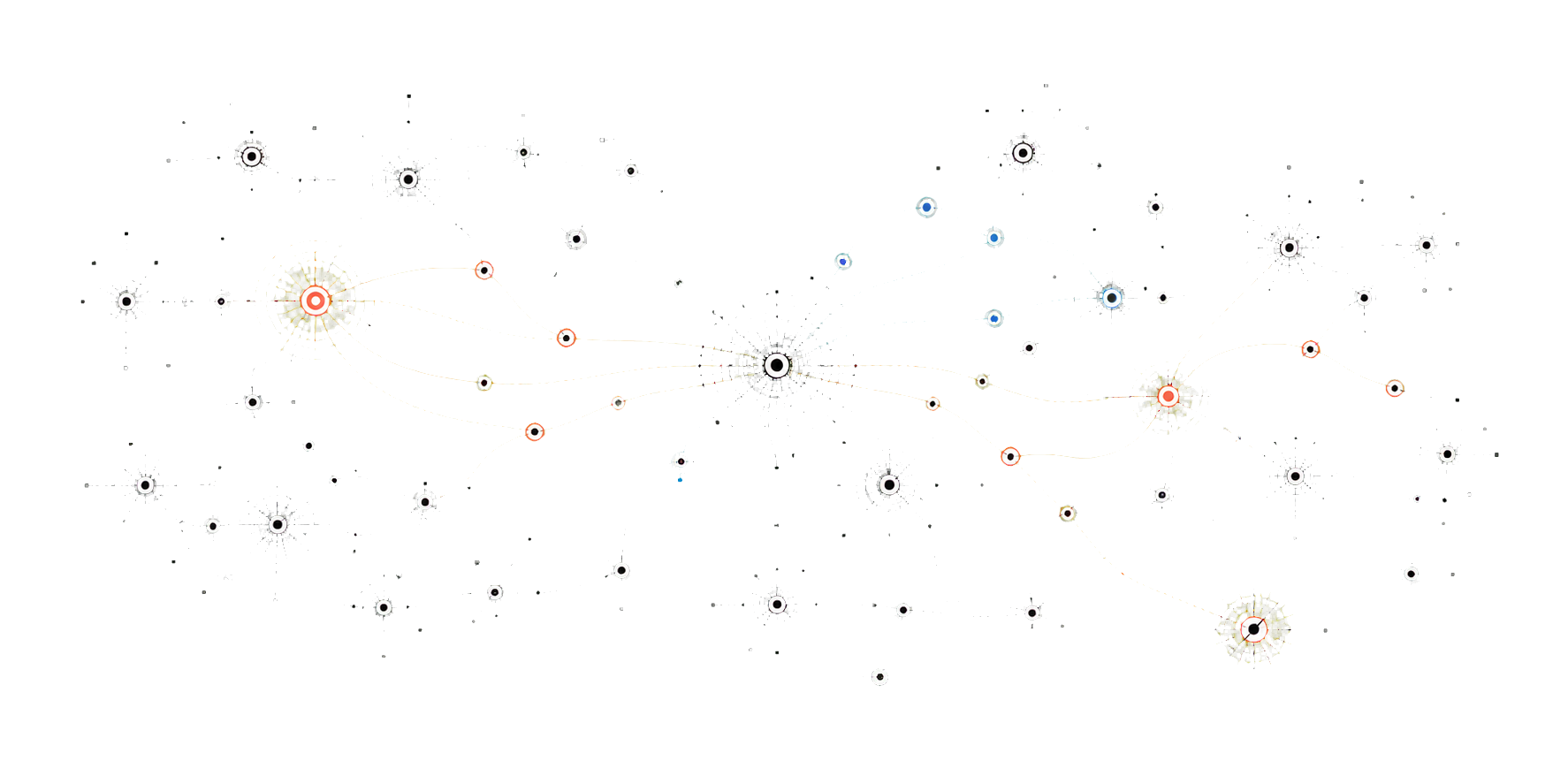
SourcesAttributionOriginIndependenceContradictionsVerification
Questions you can ask directly about information.
Search follows sources, actors, repetitions, events, and evidence. It does not stop at the material repeating a word.
Are these confirmations truly independent?
Which sources merely repeat the same origin?
Where do accounts describe the same event incompatibly?
Which document supports this claim?
What still needs verification?
Ask where the information came from. The platform retrieves the available lineage, distinguishes repetition from confirmation, and keeps a path to each source.
Finding material is quick. Reconstructing its lineage still consumes the inquiry.
Add interviews, documents, datasets, and records, then start the analysis. Trailon prepares sources, actors, claims, origins, and relationships for review before the next question.
Sources and signals enter the investigation.
Interviews, messages, datasets, documents, and earlier articles preserve their origin and format.
The platform prepares actors, claims, and relationships.
Repetition and possible confirmation paths emerge without manual assembly.
Attribution, independence, and ambiguity require confirmation.
Automation organizes the landscape; credibility and publication still require judgment.
Search directly across the whole inquiry.
Every answer can be examined down to sources, records, and excerpts that support or challenge it.
Connect signals without erasing each one’s origin.
Explore the same inquiry by claim, source, actor, event, origin, or disagreement—without making a new summary for each question.
By information
Start with a claim and reconstruct sources, repetitions, independent confirmations, and contradictions.
By source
Examine what a person, document, or dataset supports—and the limits of each origin within the inquiry.
By actor
Follow appearances, relationships, events, and accounts linked to a person or organization.
By event
Compare how distinct sources describe the same episode without prematurely reconciling them.
By origin
Trace a chain of repetition back to where information entered the investigation.
By disagreement
Keep incompatible dates, accounts, and interpretations visible until support exists to proceed.
Repetition adds volume. Independence can add evidentiary value.
Two articles may repeat one origin. Two people may repeat one account. Agreement becomes more meaningful only when the information’s lineage stays visible.
Two sources saying the same thing may still depend on one origin.
ORIGIN STAYS VISIBLE
The chain of repetition does not disappear when information reaches a summary.
ATTRIBUTION IS NOT ENDORSEMENT
Recording someone’s claim does not adopt that account as truth.
CONTRADICTION IS NOT NOISE
A disagreement may define the next question in an inquiry.
From summary to source. From source to the earliest available origin.
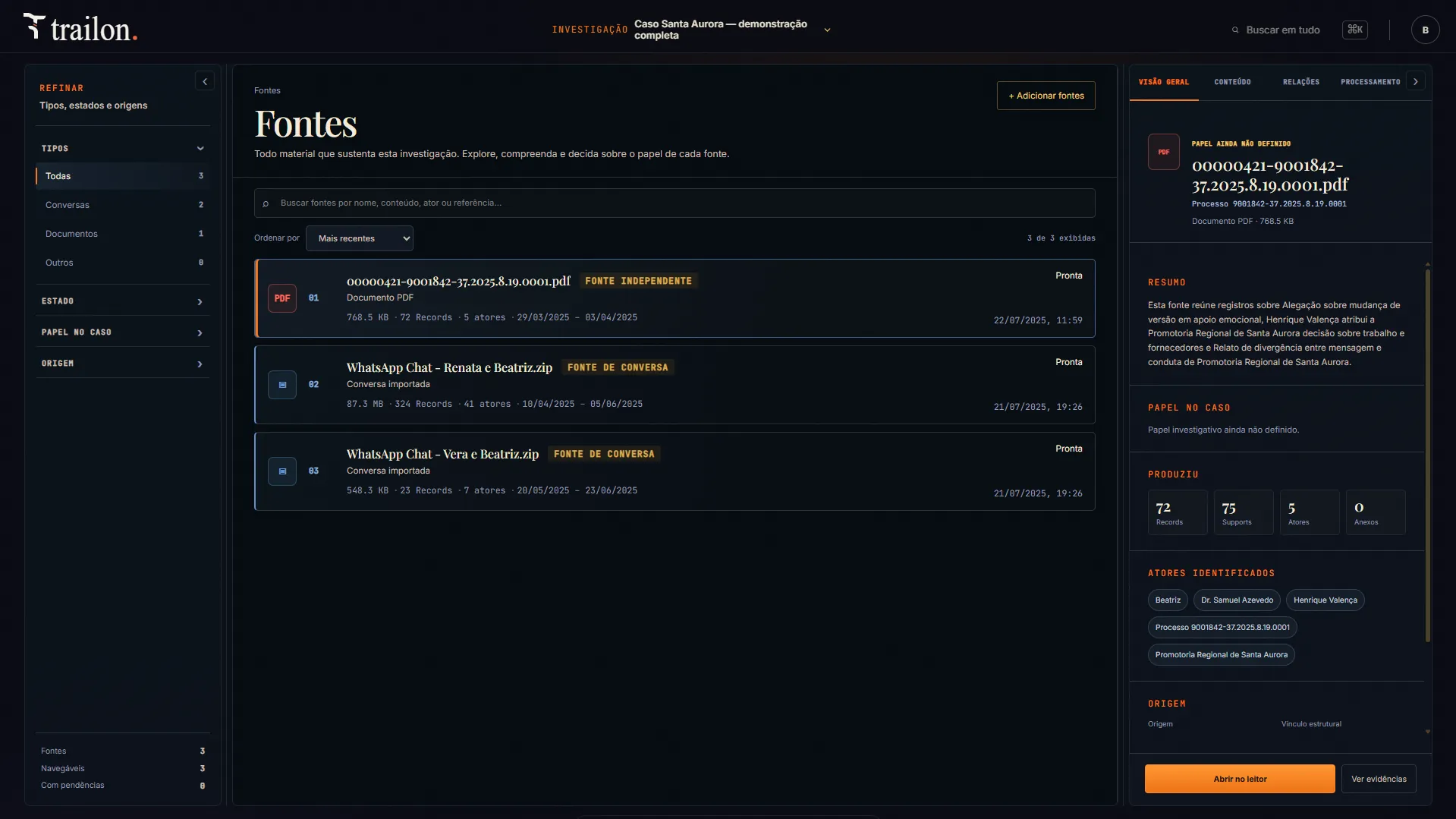
Trailon keeps type, role, actors, resulting records, and origin on one path. What looks like confirmation can be examined before it enters a reading.
The inquiry must survive the person who found the first lead.
Investigations span months, teams, sources, and publications. Transferring a folder does not transfer what was verified, rejected, repeated, or left open.
Sources do not become loose references.
Each item stays linked to what it supports, challenges, and leaves unanswered.
Verification retains its history.
A claim can develop from lead to supported reading without pretending it always held that status.
A new source meets what it changes.
An interview or document may support one point—or reshape the whole inquiry.
What changes in an inquiry.
Information can be traced to the earliest available record and later repetitions.
Confirmations arriving through distinct paths remain distinguishable from repetition.
Summaries do not erase who claimed something, when, and on what basis.
Material limiting or challenging a reading does not disappear into the most fluent answer.
Information not yet obtained remains an absence, not a convenient inference.
Someone else can resume an inquiry from what was verified, rejected, or left open.
Do not mistake repetition for confirmation. Make visible what actually supports a claim.
See how Trailon can connect sources, repetitions, independent confirmations, and contradictions without replacing fact-checking, attribution, or editorial decisions.